Updated Feb 24, 2022.
The Achaemenian Kings left extensive cuneiform inscriptions in Old Persian dated roughly between 600 BCE and 300 BCE. They also left ruins which have been described as the most grandiose of the ancient world. While it is by no means certain that they were orthodox Zoroastrians, the majority opinion among scholars is that this is very likely. One of the strongest arguments for this is the frequent mention of Ahura Mazda in the inscriptions, which is almost certainly an innovation of Zarathushtra's. Their religion is also described by Herodotus in sufficient detail to leave little doubt that they were basically Zoroastrian.
"Ahura Mazda came to my aid."
It was thanks to Darius the Great that we have been able to decipher the cuneiform script, which had fallen into even deeper oblivion than Egyptian hieroglyphs.
Based on Roland G. Kent, Old Persian, 1953
See UC Berkeley site for an Old Persian syllabary
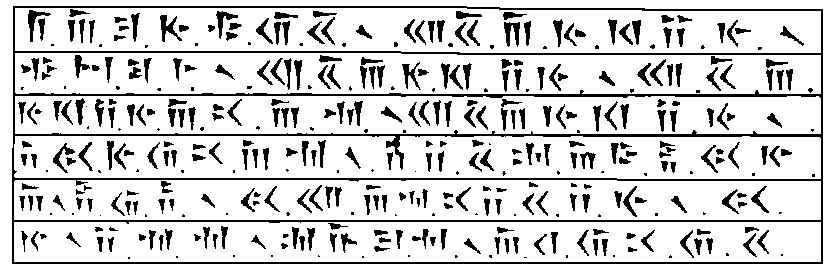
Slightly incomplete OP text on gold tablet.
| Text: | Translation: |
|---|---|
|
1 Ariyâramna : xshyathiya : vazraka : xshâyath 2 iya : xshâyathiyânâm : xshâyathiya : Pârsâ 3 : Cishpaish : xshâyathiyahyâ : puça : Haxâmanishah 4 yâ : napâ : thâtiy : Ariyâramna : xshâyathiya 5 : iyam : dahyâushi : Pârsâ : tya adam : dârayâ 6 miy : hya : uvaspâ : umartiyâ : manâ : baga 7 : vazraka : Auramazdâ frâbara : vashnâ : Au 8 ramazdâha : adam xshâyathiya : iyam da 9 hyâush : amiy : thâtiy : Ariyâramna 10 : xshâyathiya : Auramazdâ : manâ : upastâ 11 m : baratuv
|
1. (1-4). Ariaramnes, the Great King, King of Kings, King in Persia,
son of Teispes the King, grandson of Achaemenes.
2. (4-9). Ariaramnes the King says: This country Persia which I hold, which is possessed of good horses, of good men, the Great God Ahuramazda bestowed it upon me. By the favor of Ahuramazda I am king in this country. 3. (9-11). Ariaramnes the King says: May Ahuramazda bear me aid. |
| Text: | Translation: |
|---|---|
|
1 Arshâma : xshâyathiya : vazraka : x
2 shâyathiya : xshâyathiyânâm : x 3 shâyathiya : Pârsa : Ariyâramna : xsh 4 âyathiyahyâ : puça : Haxâmanishiya 5 : thâtiy : Arshâma : xshâyathiya : Au 6 ramazdâ : baga : vazraka : hya : mathish 7 ta : bagânâm : mâm : xshâyathiya 8 m : akunaush : hauv dahyâum : P 9 ârsam : manâ : frâbara : tya ukâram 10 : uvaspam : vashnâ : Auramazdâha : im 11 âm dahyâum : dârayâmiy : mâm : 12 Auramazdâ : pâtuv : utâmaiy : v 13 itham : utâ : imâm : dahyâum : tya : 14 adam : dârayâmiy : hauv : pâtuv
|
1. (1-4). Arsames, the Great King, King of Kings, King (in) Persia,
son (of) Ariaramnes the King, an Achaemenian.
2. (5-14). Arsames the King says: Ahuramazda, great god, the greatest of gods, made me king. He bestowed on me the land Persia, with good people, with good horses. By the favor of Ahuramazda I hold this land. May Ahuramazda protect me, and my royal house, and may he protect this land which I hold. |
| Text: | Translation: |
|---|---|
|
1 adam : Kûrush : xshâya
2 thiya : Haxâmanishiya | I am Cyrus the King, an Achaemenian. |
| Text: | Translation: |
|---|---|
| 1 Kûrush : xshâyathiya : vazraka : Kabûjiya
2 hyâ : xshâyathiyahyâ : puça : Haxâmanishiya : 3 thâtiy : yathâ ... 4 ... ... akutâ ... | Cyrus the Great King, son of Cambyses the King, an Achaemenian. He says: When ... made ... |
Trilingual inscription on folds of king's garment in 3 doorways of the palace
| Text: | Translation: |
|---|---|
| Kûrush : xshâyathiya : vazraka : Haxâmanishiya | Cyrus the Great King, an Achaemenian. |
Trilingual inscription on face of a gorge beneath panel of sculptures
| Text: | Translation: |
|---|---|
|
1 : adam : Dârayavaush : xshâyathiya : vazraka : xshâyatha
: xshâyathiy
2 ânâm : xshâyathiya : Pârsaiy : xshâyathiya : dahyûnâm : Visht 3 âspahyâ : puça : Arshâmahyâ napâ : Haxâmanishiya : thâtiy : 4 Dârayavaush : xshâyathiya : manâ : pitâ : Vishtâspa : Vishtâspahyâ : pitâ : Arsh 5 âma : Arshâmahyâ : pitâ : Ariyâramna : Ariyâramnahyâ : pitâ: Cishpish : Cishp 6 âish : pitâ : Haxâmanish : thâtiy : Dârayavaush : xshâthiya : avahyarâ 7 diy : vayam : Haxâmanishiyâ : thahyâmahy : hacâ : paruviyata : âmâtâ : ama 8 hy hacâ : paruviyata :hyâ :amâxam : taumâ : xshâyathiyâ : âha : th 9 âtiy : Dârayavaush : xshâyathiya : VIII : manâ : taumâyâ : tyaiy : paruvam 10 xshâyathiyâ : âha : adam navama : IX : duvitâparanam : vavam : xshâyathi 11 yâ : amahy : thâtiy : Dârayavaush : xshâyathiya : vashnâ : Auramazd 12 âha : adam : xshâyathiya : amiy : Auzamazdâ : xshaçam : manâ : frâbara : th 13 âtiy : Dârayavaush : xshâyathiya : imâ : dahyâva : tyâ : manâ : patiyâisha : vashn 14 â : Auramazdâha : adamshâm : xshâyathiya : âham : Pârsa : Ûvja : Bâbirush : A 15 thurâ : Arabâya : Mudrâya : tyaiy : drayahyâ : Sparda : Yauna : Mâda : Armina : Kat 16 patuka : Parthava : Zraka : Haraiva : Uvârazmîy : Bâxtrish : Suguda : Gadâra : Sa 17 ka : Thatagush : Harauvatish : Maka : fraharavam : dahyâva : XXIII : thâtiy : Dâra 18 yavaush : xshâyathiya : imâ : dahyâva : tyâ : manâ : patiyâita : vashnâ : Au 19 ramazdâha : manâ : badakâ : âhatâ : manâ : bâjim : abaratâ : tyashâm : hacâma 20 : athahya : xshapava : raucapativâ : ava : akunavayatâ : thâtiy : Dârayava 21 ush : xshâyathiya : atar : imâ : dahyâva : martiya : hya : âgariya : âha : avam : u 22 bartam : abaram : hya : arika : âha : avam : ufrastam : aparsam : vashnâ : Auramazdâ 23 ha : imâ : dahyâva : tyanâ : manâ : dâtâ : apariyâya : yathâshâm : hacâma : athah 24 ya : avathâ : akunavayatâ : thâtiy : Dârayavaush : xshâyathiya : Auramazdâ 25 maiy : ima xshaçam : frâbara : Auramazdâmaiy : upastâm : abara : yâtâ : ima : xshaçam : 26 hamadârayaiy : vashnâ : Auramazdâha : ima : xshaçam : dârayâmiy : thâ 27 tiy : Dârayavaush : xshâyathiya : ima : tya : manâ : kartam : pasâva : yathâ : xsh 28 âyathiya : abavam : Kabûjiya : nâma : Kûraush : puça : amâxam : taumây 29 â : hauvam : idâ : xshâyathiya : âha : avahyâ : Kabûjiyahyâ : brâ 30 tâ : Bardiya : nâma : âha : hamâtâ : hamapitâ : Kabûjiyahyâ : pasâva : Ka 31 bûjiya : avam : Bardiyam : avâja : yathâ : Kabûjiya : Bardiyam : avâja : kârahy 32 â : naiy : azdâ : abava : tya : Bardiya : avajata : pasâva : Kabûjiya : Mudrâyam 33 : ashiyava : yathâ : Kabûjiya : Mudrâyam : ashiyava : pasâva : kâra : arika : abava 34 : pasâva : drauga : dahyauvâ : vasiy : abava : utâ : Pârsaiy : utâ : Mâdaiy : ut 35 â : aniyâuvâ : dahyushuvâ : thâtiy : Dârayavaush : xshâyathiya : pa 36 sâva : I martiya : magush : âha : Gaumâta : nâma : hauv : udapatatâ : hacâ : Paishi 37 yâuvâdâyâ : Arakadrish : nâma : kaufa : hacâ : avadasha : Viyaxnahya : mâh 38 yâ : XIV : raucabish : thakatâ : âha : yadiy : udapatatâ : hauv : kârahyâ : avathâ 39 : adurujiya : adam : Bardiya : amiy : hya : Kûraush : puça : Kabûjiyahyâ : br 40 âtâ : pasâva : kâra : haruva : hamiçiya : abava : hacâ : Kabûjiyâ : abiy : avam : 41 ashiyava : utâ : Pârsa : utâ : Mâda : utâ : aniyâ : dahyâva : xshaçam : hauv 42 : agarbâyatâ : Garmapadahya : mâhyâ : IX : raucabish : thakatâ : âha : avathâ : xsha 43 çam : agarbâyatâ : pasâva : Kabûjiya : uvâmarshiyush : amariyatâ : thâtiy 44 : Dârayavaush : xshâyathiya : aita : xshaçam : tya : Gaumâta : hya : magush : adîn 45 â : Kabûjiyam : aita : xshaçam : hacâ : paruviyata : amâxam : taumâyâ : â 46 ha : pasâva : Gaumâta : hya : adînâ : Kabûjiyam : utâ : Pârsam : utâ 47 : Mâdam : utâ : aniyâ : dahyâva : hauv : âyasatâ : uvâpashiyam : akutâ : hau 48 v : xshâyathiya : abava : thâtiy : Dârayavaush : xshâyathiya : naiy : âha : martiya : 49 naiy : Pârsa : naiy : Mâda : naiy : amâxam : taumâyâ : kashciy : hya : avam : Gau 50 mâtam : tyam : magum : xshaçam : dîtam : caxriyâ : kârashim : hacâ : darsham : a 51 tarsa : kâram : vasiy : avâjaniyâ : hya : paranam : Bardiyam : adânâ : avahyar 52 âdiy : kâram : avâjaniyâ : mâtyamâm : xshnâsâtiy : tya : adam : naiy : Bard 53 iya : amiy : hya : Kûraush : puça : kashciy : naiy : adarshnaush : cishciy : thastana 54 iy : pariy : Gaumâtam : tyam : magum : yâtâ : adam : arasam : pasâva : adam : Aura 55 maz(d)âm : patiyâvahyaiy : Auramazdâmaiy : upastâm : abara : Bâgayâdaish : 56 mâhyâ : X : raucabish : thakatâ : âha : avathâ :adam : hadâ : kamnaibish : martiyaibi 57 sh : avam : Gaumâtam : tyam : magum avâjanam : utâ : tyaishaiy : fratamâ : mar 58 tiyâ : anushiyâ : âhatâ : Sikayauvatish : nâmâ : didâ : Nisâya : nâ 59 mâ : dahyâush : Mâdaiy : avadashim : avâjanam : xshaçamshim : adam : adînam : va 60 shnâ : Auramazdâha : adam : xshâyathiya : abavam : Auramazdâ : xshaçam : manâ : fr 61 âbara : thâtiy : Dârayavaush : xshâyathiya : xshaçam : tya : hacâ : amâxam ta 62 umâyâ : parâbartam : âha : ava : adam : patipadam : akunavam : adamshim : gâtha 63 vâ : avâstâyam : yathâ : paruvamciy : avathâ : adam : akunavam : âyadan 64 â : tyâ : Gaumâta : hya : magush : viyaka : adam : niyaçârayam : kârahyâ : abi 65 carish : gaithâmcâ : mâniyamcâ : vithbishcâ : tyâdish : Gaumâta : hya : 66 magush : adînâ : adam : kâram : gâthavâ : avâstâyam : Pârsamcâ : Mâdamc 67 â : utâ : aniyâ : dahyâva : yathâ : paruvamciy : avathâ : adam : tya : parâbarta 68 m : patiyabaram : vashnâ : Auramazdâha : ima : adam : akunavam : adam : hamataxshaiy : 69 yâtâ : vitham : tyâm : amâxam : gâthavâ : avâstâyam : yathâ : paruvamciy : 70 avathâ : adam : hamataxshaiy : vashnâ : Auramazdâha : yathâ : Gaumâta : hya : magu 71 sh : vitham : tyâm : amâxam : naiy : parâbara : thâtiy : Dârayavaush : xshâyath 72 iya : ima : tya : adam : akunavam : pasâva : yathâ : xshâyathiya : abavam : thâtiy 73 : Dârayavaush : xshâyathiya : yathâ : adam : Gaumâtam : tyam : magum avâjanam : pa 74 sâva : I martiya : Âçina : nâma : Upadarmahyâ : puça : hauv : udapatatâ : Ûvjai 75 y : kârahyâ : avathâ : athaha : adam : Ûvjaiy : xshâyathiya : amiy : pasâva : Ûv 76 jiyâ : hamiçiyâ : abava : abiy : avam : Âçinam : ashiyava : hauv : xshâyathiya 77 abava : Ûvjaiy : utâ : I martiya : Bâbiruviya : Naditabaira : nâma : Ainairahy 78 â : puça : hauv : udapatatâ : Bâbirauv : kâram : avathâ : adurujiya : adam : Nab 79 ukudracara : amiy : hya : Nabunaitahyâ : puça : pasâva : kâra : hya : Bâbiruviya 80 : haruva : abiy : avam : Naditabairam : ashiyava : Bâbirush : hamiçiya : abava : x 81 shaçam : tya : Bâbirauv : hauv : agarbâyatâ : thâtiy : Dârayavaush : xshâya 82 thiya : pasâva : adam : frâishayam : Ûvjam : hauv : Âçina : basta : anayatâ : abiy : mâ 83 m : adamshim : avâjanam : thâtiy : Dârayavaush : xshâyathiya : pasâva : adam : Bâ 84 birum : ashiyavam : abiy : avam : Naditabairam : hya : Nabukudracara : agaubatâ 85 : kâra : hya : Naditabairahyâ : Tigrâm : adâraya : : avadâ : aishtatâ : utâ 86 abish : nâviyâ : âha : pasâva : adam : kâram : mashkâuvâ : avâkanam : aniyam : usha 87 bârim : akunavam : aniyahyâ : asam : frânayam : Auramazdâmaiy : upastâm 88 : abara : vashnâ : Auramazdâha : Tigrâm : viyatarayâmâ : avadâ : avam : kâram : 89 tyam : Naditabairahyâ : adam : ajanam : vasiy : Âçiyâdiyahya : mâhyâ : XXVI : rau 90 cabish : thakatâ : âha : avathâ : hamaranam : akumâ : thâtiy : Dârayavaush : x 91 shâyathiya : pasâva : adam : Bâbirum : ashiyavam : athiy : Bâbirum : yathâ : naiy : up 92 âyam : Zâzâna : nâma : vardanam : anuv : Ufrâtuvâ : avadâ : hauv : Nadita 93 baira : hya : Nabukudracara : agaubatâ : âish : hadâ : kârâ : patish : mâm : hamaranam : 94 cartanaiy : pasâva hamaranam akumâ : Auramazdâmaiy : upastâm : abara : vashnâ : Aurama 95 zdâha : kâram : tyam : Naditabairahyâ : adam : ajanam : vasiy : aniya : âpiyâ : âhyatâ : â 96 pishim : parâbara : Anâmakahya : mâhyâ : II : raucabish : thakatâ : âha : avathâ : hamaranam akumâ
|
1. (1.1-3.) I am Darius the Great King, King of Kings, King in
Persia, King of countries, son of Hystaspes, grandson of
Arsames, an Achaemenian.
2. (1.3-6.) Darius the King says: My father was Hystaspes; Hystaspes' father was Arsames; Arsames' father was Ariaramnes; Ariaramnes' father was Teispes; Teispes' father was Achaemenes. 3. (1.6-8.) Darius the King says: For this reason we are called Achaemenians. From long ago we have been noble. From long ago our family had been kings. 4. (1.8-11.) Darius the King says: there were 8 of our family who were kings before me; I am the ninth; 9 in succession we have been kings. 5. (1.11-2.) Darius the King says: By the favor of Ahuramazda I am King; Ahuramazda bestowed the kingdom upon me. 6. (1.12-7.) Darius the King says: These are the countries which came to me; by the favor of Ahuramazda I was king of them: Persia, Elam, Babylonia, Assyria, Arabia, Egypt, (those) who are beside the sea, Sardis, Ionia, Media, Armenia, Cappadocia, Parthia, Drangiana, Aria, Chorasmia, Bactria, Sogdiana, Gandara, Scythia, Sattagydia, Arachosia, Maka: in all, 23 provinces. 7. (1.17-20.) Darius the King says: These are the countries which came to me; by the favor of Ahuramazda they were my subjects; they bore tribute to me; what was said to them by me either by night or by day, that was done. 8. (1.20-4.) Darius the King says: Within these countries, the man who was loyal, him I rewarded well; (him) who was evil, him I punished well; by the favor of Ahuramazda these countries showed respect toward my law; as was said to them by me, thus was it done. 9. (1.24-26.) Darius the King says: Ahuramazda bestowed the kingdom upon me; Ahuramazda bore me aid until I got possession of this kingdom; by the favor of Ahuramazda I hold this kingdom. 10. (1.26-35.) Darius the King says: This is what was done by me after I became king. A son of Cyrus, Cambyses by name, of our family -- he was king here of that Cambyses there was a brother, Smerdis by name, having the same mother and the same father as Cambyses. Afterwards, Cambyses slew that Smerdis. When Cambyses slew Smerdis, it did not become known to the people that Smerdis had been slain. Afterwards, Cambyses went to Egypt. When Cambyses had gone off to Egypt, after that the people became evil. After that the Lie waxed great in the country, both in Persia and in Media and in the other provinces. 11. (1.35-43.) Darius the King says: Afterwards, there was one man, a Magian, named Gaumata; he rose up from Paishiyauvada. A mountain named Arakadri -- from there 14 days of the month Viyakhna were past when he rose up. He lied to the people thus: "I am Smerdis, the son of Cyrus, brother of Cambyses." After that, all the people became rebellious from Cambyses, (and) went over to him, both Persia and Media and the other provinces. He seized the kingdom; of the month Garmapada 9 days were past, then he seized the kingdom. After that, Cambyses died by his own hand. 12. (1.43-8.) Darius the King says: This kingdom which Gaumata the Magian took away from Cambyses, this kingdom from long ago had belonged to our family. After that, Gaumata the Magian took (it) from Cambyses; he took to himself both Persia and Media and the other provinces, he made (them) his own possession, he became king. 13. (1.48-61.) Darius the King says: There was not a man, neither a Persian nor a Mede nor anyone of our family, who might make that Gaumata the Magian deprived of the kingdom. The people feared him greatly, (thinking that) he would slay in numbers the people who previously had known Smerdis; for this reason he would slay the people, "lest they know me, that I am not Smerdis the son of Cyrus." Nobody dared say anything about Gaumata the Magian, until I came. After that I sought help of Ahuramazda; Ahuramazda bore me aid; of the month Bagayadi 10 days were past, then I with a few men slew that Gaumata the Magian, and those who were his foremost followers. A fortress named Sikayauvati, a district named Nisaya, in Media -- here I slew him. I took the kingdom from him. By the favor of Ahuramazda I became king; Ahuramazda bestowed the kingdom upon me. 14. (1.61-71.) Darius the King says: The kingdom which had been taken away from our family, that I put in its Place; I reestablished it on its foundation. As before, so I made the sanctuaries which Gaumata the Magian destroyed. I restored to the people the pastures and the herds, the household slaves and the houses which Gaumata the Magian took away from them. I reestablished the people on its foundation, both Persia and Media and the other provinces. As before, so I brought back what had been taken away. By the favor of Ahuramazda this I did: I strove until I reestablished our royal house on its foundation as (it was) before. So I strove, by the favor of Ahuramazda, so that Gaumata the Magian did not remove our royal house. 15. (1.71-2.) Darius the King says: This is what I did after I became king. 16. (1.72-81.) Darius the King says: When I had slain Gaumata the Magian, afterwards one man, named Asina, son of Upadarma -- he rose up in Elam. To the people he said thus: "I am king in Elam." Afterwards the Elamites became rebellious, (and) went over to that Asina; he became king in Elam. And one man, a Babylonian, named Nidintu-Bel, son of Ainaira -- he rose up in Babylon; thus he deceived the people: "I am Nebuchadrezzar the son of Nabonidus." Afterwards the Babylonian people all went over to that Nidintu-Bel; Babylonia became rebellious; he seized the kingdom in Babylon. 17. (1.81-3). Darius the King says: After that I sent (a message) to Elam. This Acina was led to me bound; I slew him. 18. (1.83-90). Darius the King says: After that I went off to Babylon, against that Nidintu-Bel who called himself Nebuchadrezzar. The army of Nidintu-Bel held the Tigris; there it took its stand, and on account of the waters (the Tigris) was unfordable. Thereupon (some of) my army I supported on (inflated) skins, others I made camel-borne, for others I brought horses. Ahuramazda bore me aid; by the favor of Ahuramazda we got across the Tigris. There I smote that army of Nidintu-Bel exceedingly; of the month Asiyadiya 26 days were past, then we fought the battle. 19. (1.90-6). Darius the King says: After that I went off to Babylon. When I had not arrived at Babylon, a town named Zazana, beside the Euphrates -- there this Nidintu-Bel who called himself Nebuchadrezzar came with an army against me, to deliver battle. Thereupon we Joined battle; Ahuramazda bore me aid; by the favor of Ahuramazda I smote that army of Nidintu-Bel exceedingly. The rest was thrown into the water, (and) the water carried it away. Of the month Anamaka 2 days were past, then we fought the battle. |
| Text: | Translation: |
|---|---|
|
1 : thâtiy : Dârayavaush : xshâyathiya : pasâva
: Naditabaira : ha
2 dâ : kamnaibish : asabâraibish : amutha : Bâbirum : ashiya 3 va : pasâva : adam : Bâbirum : ashiyavam : vashnâ : Auramazdâha : utâ Bâ 4 birum : agarbâyam : utâ : avam : Naditabairam : agarbâyam : pasâva : ava 5 m : Naditabairam : adam : Bâbirauv : avâjanam : thâtiy : Dârayavaush : x 6 shâyathiya : yâtâ : adam : Babirauv : âham : imâ : dahyâva : tyâ : hacâma : ha 7 miçiyâ : abava : Pârsa : Ûvja : Mâda : Athurâ : Mudrâya : Parthava : Margush : Tha 8 tagush : Saka : thâtiy : Dârayavaush : xshâyathiya : I martiya : Martiya : nâ 9 ma : Cicixrâish : puça : Kuganakâ : nâma : vardanam : Pârsaiy : avadâ : adâraya : 10 hauv : udapatatâ : Ûvjaiy : kârahyâ : avathâ : athaha : adam : Imanish : amiy : Û 11 vjaiy : xshâyathiya : thâtiy : Dârayavaush : xshâyathiya : adakaiy : adam : ashna 12 iy : âham : abiy : Ûvjam : pasâva : hacâma : atarsa : Ûvjiyâ : avam : Marti 13 yam : agarbâya : hyashâm : mathishta : âha : utâshim : avâjana : thâtiy : D 14 ârayavaush : xshayathiya : I martiya : Fravartish : nâma : Mâda : hauv : udapatat 15 â : Mâdaiy : kârahyâ : avathâ : athaha : adam : Xshathrita : amiy : Uvaxshtrah 16 yâ : taumâyâ : pasâva : kâra : Mâda : hya : uithâpatiy : hauv : hacâma : hamiçiya : a 17 bava : abiy : avam : Fravartim : ashiyava : hauv : xshâyathiya : abava : Mâdaiy : 18 thâtiy : Dârayavaush : xshâyathiya : kâra : Pârsa : utâ : Mâda : hya : upâ : mâm : â 19 ha : hauv : kamnam : âha : pasâva : adam : kâram : frâishayam : Vidarna : nâma : Pârsa : man 20 â : badaka : avamshâm : mathishtam : akunavam : avathâshâm : athaham : paraitâ : avam : k 21 âram : tyam : Mâdam : jatâ : hya : manâ : naiy : gaubataiy : pasâva : hauv : Vidarna : ha 22 dâ : kârâ : ashiyava : yathâ : Mâdam : parârasa : Mârush : nâma : vardanam : Mâ 23 daiy : avadâ : hamaranam : akunaush : hadâ : Mâdaibish : hya : Mâdaishuva 24 : mathishta : âha : hauv : adakaiy : naiy : avadâ : âha : Auramazdâmaiy : u 25 pastâm : abara : vashnâ : Auramazdâha : kâra : hya : manâ : avam : kâram : t 26 yam : hamiçiyam : aja : vasiy : Anâmakahya : mâhyâ : XXVII : raucabish : thakat 27 â : âha : avathâshâm : hamaranam : kartam : pasâva : hauv : kâra : hya : manâ : Kapada : nâm 28 â : dahyâush : Mâdaiy : avadâ : mâm : amânaiya : yâtâ : adam : arasam : Mâda 29 m : thâtiy : Dârayavaush : xshâyathiya : Dâdarshish : nâma : Arminiya : man 30 â : badaka : avam : adam : frâishayam : Arminam : avathâshaiy : athaham : paraidiy : kâ 31 ra : hya : hamiçiva : manâ : naiy : gaubataiy : avam : jadiy : pasâva : Dâdarshi 32 sh : ashiyava : yathâ : Arminam : parârasa : pasâva : hamiçiyâ : hagmati : parai 33 tâ : patish : Dâdarshim : hamaranam : cartanaiy : Zûzahya : nâma : âvahanam : A 34 rminiyaiy : avadâ : hamaranam : akunava : Auramazdâmaiy : upastâm : a 35 bara : vashnâ : Auramazdâha : kâra : hya : manâ : avam : kâram : tyam : hamiçiyam : 36 aja : vasiy : Thûravâharahya : mâhyâ : VIII : raucabish : thakatâ : âha : avath 37 âshâm : hamaranam : kartam : thâtiy : Dârayavaush : xshâyathiya : patiy : duv 38 itîyam : hamiçiyâ : hagmatâ : paraitâ : patish : Dâdarshim : hamaranam : carta 39 naiy : Tigra : nâmâ : didâ : Arminiyaiy : avadâ : hamaranam : akunava : A 40 uramazdâmaiy : upastâm : abara : vashnâ : Auramazdâha : kâra : hya : manâ : a 41 vam : kâram : tyam : hamiçiyam : aja : vasiy : Thûravâharahya : mâhyâ : XVIII 42 : raucabish : thakatâ : âha : avathâshâm : hamaranam : kartam : thâtiy : Dâraya 43 vaush : xshâyathiya : patiy : çitîyam : hamiçiyâ : hagmatâ : paraitâ : pat 44 ish : Dâdarshim : hamaranam : cartanaiy : Uyamâ : nâmâ : didâ : Arminiyaiy : a 45 vadâ : hamaranam : akunava : Auramazdâmaiy : upastâm : abara : vashnâ : Aurama 46 zdâha : kâra : hya : manâ : avam : kâram : tyam : hamiçiyam : aja : vasiy : Thâigarca 47 ish : mâhyâ : IX : raucabish : thakatâ : âha : avathâshâm : hamaranam : kartam : pasâva 48 : Dâdarshish : citâ : mâm : amânaya : Arminiyaiy : yâtâ : adam : arasam : Mâ 49 dam : thâtiy : Dârayavaush : xshâyathiya : pasâva : Vaumisa : nâma : Pârsa : manâ : ba 50 daka : avam : adam : frâishayam : Arminam : avathâshaiy : athaham : paraidiy : kâra : 51 hya : hamiçiya : manâ : naiy : gaubataiy : avam : jadiy : pasâva : Vaumisa : a 52 shiyava : yathâ : Arminam : parârasa : pasâva : hamiçiyâ : hagmatâ : paraitâ : pa 53 tish : Vaumisam hamaranam : cartanaiy : Izalâ : nâmâ : dahyâush : Athurây 54 â : avadâ : hamaranam : akunava : Auramazdâmaiy : upastâm abara : vashnâ : Au 55 ramazdâha : kâra : hya : manâ : avam : kâram : tyam : hamiçiyam : aja : vasiy : 56 Anâmakahya : mâhyâ : XV : raucabish : thakatâ : âha : avathâshâm : hamaranam : 57 kartam : thâtiy : Dârayavaush : xshâyathiya : patiy : duvitîyam : ham 58 içiyâ : hagmatâ : paraitâ : patish : Vaumisam : hamaranam : cartanaiy : Au 59 tiyâra : nâmâ : dahyâush : Arminiyaiy : avadâ : hamaranam : akunava : 60 Auramazdâmaiy : upastâm : abara : vashnâ : Auramazdâha : kâra : hya : ma 61 nâ : avam : kâram : tyam : hamiçiyam : aja : vasiy : Thûravâharahya : mâh 62 yâ : jiyamnam : patiy : avathâshâm : hamaranam : kartam : pasâva : Vaumisa 63 : citâ : mâm : amânaya : Arminiyâiy : yâtâ : adam : arasam : Mâdam 64 : thâtiy : Dârayavaush : xshâyathiya : pasâva : adam : nijâyam : hacâ : 65 Bâbiraush : ashiyavam : Mâdam : yathâ : Mâdam : parârasam : Kudurush : nâma : 66 vardanam : Mâdaiy : avadâ : hauv : Fravartish : hya : Mâdaiy : xshâyathiya : a 67 gaubatâ : âish : hadâ : kârâ : patish : mâm : hamaranam : cartanaiy : pasâva hamarana 68 m : akumâ : Auramazdâmaiy : upastâm : abara : vashnâ : Auramazdâha : kâram 69 : tyam : Fravartaish : adam : ajanam : vasiy : Adukanaishahya : mâhyâ : XXV : ra 70 ucabish : thakatâ : âha : avathâ : hamaranam : akumâ : thâtiy : Dârayavaush : x 71 shâyathiya : pasâva : hauv : Fravartish : hadâ : kamnaibish : asabâraibish : amutha : Ra 72 gâ : nâmâ : dahyâush : Mâdaiy : avaparâ : ashiyava : pasâva : adam : kâram : f 73 râishayam : nipadiy : Fravartish : âgarbîta : anayatâ : abiy : mâm : ada 74 mshaiy : utâ : nâham : utâ : gaushâ : utâ : hazânam : frâjanam : utâsha 75 iy : I casham : avajam : duvarayâmaiy : basta : adâriya : haruvashim : k 76 âra : avaina : pasâvashim : Hagmatânaiy : uzmayâpatiy : akunavam 77 : utâ : martiyâ : tyaishaiy : fratamâ : anushiyâ : âhatâ : avaiy : Ha 78 gmatânaiy : atar : didâm : frâhajam : thâtiy : Dârayavaush : xsh 79 âyathiya : I martiya : Ciçataxma : nâma : Asagartiya : hauvmaiy : hamiçiya : 80 abava : kârahyâ : avathâ : athaha : adam : xshâyathiya : amiy : Asagarta 81 iy : Uvaxshtrahyâ : taumâyâ : pasâva : adam : kâram : Pârsam : ut 82 â : Mâdam : frâishayam : Taxmaspâda : nâma : Mâda : manâ : badaka : avam 83 shâm : mathishtam : akunavam : avathâshâm : athaham : paraitâ : k 84 âram : hamiçiyam : hya : manâ : naiy : gaubâtaiy : avam : jatâ : pas 85 âva : Taxmaspâda : hadâ : kârâ : ashiyava : hamaranam : akunaush : had 86 â : Ciçataxmâ : Auramazdâmaiy : upastâm : abara : vashnâ : Auramaz 87 dâha : kâra : hya : manâ : avam : kâram : tyam : hamiçiyam : aja : utâ : C 88 içataxmam : agarbâya : anaya : abiy : mâm pasâvashaiy : adam : utâ : n 89 âham : utâ : gaushâ : frâjanam : utâshaiy : I casham : avajam : duvarayâ 90 maiy : basta : adâriya : haruvashim : kâra : avaina : pasâvashim Arbairâyâ : 91 uzmayâpatiy : akunavam : thatiy : Dârayavaush : xshâyathiya : ima : tya : ma 92 nâ : kartam : Mâdaiy : thâtiy : Dârayavaush : xshâyathiya : Parthava : utâ : Var 93 kâna : hamiçiyâ : abava : hacâma : Fravartaish : agaubatâ : Vishtâspa : manâ : pitâ : ha 94 uv : Parthavaiy : âha : avam : kâra : avaharda : hamiçiya : abava : pasâva : Vishtâspa : 95 ashiyava : hadâ : kârâ : hyashaiy : anushiya : âha : Vishpauzâtish : nâma : varda 96 nam : Parthavaiy : avadâ : hamaranam : akunaush : hadâ : Parthavaibish : Auramazdâmaiy 97 : upastâm : abara : vashnâ : Auramazdâha : Vishtâspa : avam : kâram : tyam : hamiçiya 98 m : aja : vasiy : Viyaxnahya : mâhyâ : XXII : raucabish : thakatâ : âha : avathâshâm : hamaranam : kartam
|
20. (2.1-5.) Darius the King says: After that, Nidintu-Bel with
a few horsemen fled; he went off to Babylon. Thereupon I went
to Babylon. By the favor of Ahuramazda both I seized Babylon and
I took that Nidintu-Bel prisoner. After that, I slew that Nidintu-Bel
at Babylon.
21. (2.5-8.) Darius the King says: While I was in Babylon, these are the provinces which became rebellious from me: Persia, Elam, Media, Assyria, Egypt, Parthia, Margiana, Sattagydia, Scythia. 22. (2.8-11.) Darius the King says: One man, named Martiya, son of Cincikhri -- a town named Kuganaka, in Persia -- there he abode. He rose up in Elam; to the people thus he said, "I am Imanish, king in Elam." 23. (2.11-3.) Darius the King says: At that time I was near Elam. Thereupon the Elamites were afraid of me; they seized that Martiya who was their chief, and slew him. 24. (2.13-7.) Darius the King says: One man, named Phraortes, a Median -- he rose up in Media. To the people thus he said, "I am Khshathrita, of the family of Cyaxares." Thereafter the Median army which (was) in the palace, became rebellious from me, (and) went over to that Phraortem. He became king in Media. 25. (2.18-29.) Darius the King says: The Persian and Median army which was with me, this was a small (force). Thereupon I sent forth an army. A Persian named Hydarnes, my subject -- I made him chief of them; I said to them thus: "Go forth, smite that Median army which does not call itself mine!" Thereupon this Hydarnes with the army marched off. When he arrived in Media, a town named Maru, in Media -- there he joined battle with the Medes. He who was chief among the Medes, he at that time was not there. Ahuramazda bore me aid; by the favor of Ahuramazda my army smote that rebellious army exceedingly. Of the month Anamaka 27 days were past, then the battle was fought by them. Thereafter this army of mine, a district named Kampanda, in Media -- there it waited for me until I arrived in Media. 26. (2.29-37.) Darius the King says: An Armenian named Dadarshi, my subject -- I sent him forth to Armenia. I said to him: "Go forth, that rebellious army which does not call itself mine, that do you smite!" Thereupon Dadarshi marched off. When he arrived in Armenia, thereafter the rebels assembled (and) came out against Dadarshi to join battle. A place named Zuzahya, in Armenia -- there they joined battle. Ahuramazda bore me aid; by the favor of Ahuramazda my army smote that rebellious army exceedingly; of the month Thuravahara 8 days were past, then the battle was fought by them. 27. (2.37-42.) Darius the King says: Again a second time the rebels assembled (and) came out against Dadarshi to join battle. A stronghold named Tigra, in Armenia -- there they joined battle. Ahuramazda bore me aid; by the favor of Ahuramazda my army smote that rebellious army exceedingly; of the month Thuravahara 18 days were past, then the battle was fought by them. 28. (2.42-9.) Darius the King says: Again a third time the rebels assembled (and) came out against Dadarshi to join battle. A fortress named Uyama, in Armenia -- there they joined battle. Ahuramazda bore me aid; by the favor of Ahuramazda my army smote that rebellious army exceedingly; of the month Thaigarci 9 days were past, then the battle was fought by them. Thereafter Dadarshi waited for me until I arrived in Media. 29. (2.49-57.) Darius the King says: Thereafter a Persian named Vaumisa, my subject-him I sent forth to Armenia. Thus I said to him: "Go forth; the rebellious army which does not call itself mine -- smite them!" Thereupon Vaumisa marched off. When he arrived in Armenia, then the rebels assembled (and) came out against Vaumisa to join battle. A district named Izala, in Assyria -- there they joined battle. Ahuramazda bore me aid; by the favor of Ahuramazda my army smote that rebellious army exceedingly; of the month Anamaka 15 days were past, then the battle was fought by them. 30. (2.57-63.) Darius the King says: Again a second time the rebels assembled (and) came out against Vaumisa to join battle. A district named Autiyara, in Armenia -- there they joined battle. Ahuramazda bore me aid; by the favor of Ahuramazda my army smote that rebellious army exceedingly; on the last day of the month Thuravaharâthen the battle was fought by them. After that, Vaumisa waited for me in Armenia until I arrived in Media. 31. (2.64-70.) Darius the King says: Thereafter I went away from Babylon (and) arrived in Media. When I arrived in Media, a town named Kunduru, in Media -- there this Phraortes who called himself king in Media came with an army against me to join battle. Thereafter we joined battle. Ahuramazda bore me aid; by the favor of Ahuramazda that army of Phraortes I smote exceedingly; of the month Adukanaisha 25 days were past, then we fought the battle. 32. (2.70-8.) Darius the King says: Thereafter this Phraortes with a few horsemen fled; a district named Raga, in Media -- along there he went off. Thereafter I sent an army in pursuit; Phraortes, seized, was led to me. I cut off his nose and ears and tongue, and put out one eye; he was kept bound at my palace entrance, all the people saw him. Afterward I impaled him at Ecbatana; and the men who were his foremost followers, those at Ecbatana within the fortress I (flayed and) hung out (their hides, stuffed with straw). 33. (2.78-91.) Darius the King says: One man named Cisantakhma, a Sagartian -- he became rebellious to me; thus he said to the people, "I am king in Sagartia, of the family of Cyaxares." Thereupon I sent off a Persian and Median army; a Mede named Takhmaspada, my subject -- I made him chief of them. I said to them thus: "Go forth; the hostile army which shall not call itself mine, and smite them!" Thereupon Takhmaspada with the army went off; he joined battle with Cisantakhma. Ahuramazda bore me aid; by the favor of Ahuramazda my army smote that rebellious army and took Cisantakhma prisoner, (and) led him to me. Afterwards I cut off both his nose and ears, and put out one eye, he was kept bound at my palace entrance, all the people saw him. Afterwards I impaled him at Arbela. 34. (2.91-2.) Darius the King says: This is what was done by me in Media. 35. (2.92-8.) Darius the King says: Parthia and Hyrcania became rebellious from me, called themselves (adherents) of Phraortes. Hystaspes my father -- he was in Parthia; him the people abandoned, became rebellious. Thereupon Hystaspes went forth with the army which was faithful to him. A town named Vishpauzati, in Parthia -- there he joined battle with the Parthians. Ahuramazda bore me aid; by the favor of Ahuramazda Hystaspes smote that rebellious army exceedingly; of the month Viyakhna 22 days were past -- then the battle was fought by them. |
| Text: | Translation: |
|---|---|
|
1 : thâtiy : Dârayavaush : xshâyathiya : pasâva
: adam : kâra
2 m : Pârsam : frâishayam : abiy : Vishtâspam : hacâ : Ragâ 3 yâ : yathâ : hauv : kâra : parârasa : abiy : Vishtâspam 4 : pasâva : Vishtâspa : âyasatâ : avam : kâram : ashiyava : Patigraba 5 nâ : nâma : vardanam : Parthavaiy : avadâ : hamaranam : akunaush : hadâ : 6 hamiçiyaibish : Auramazdâmaiy : upastâm : abara : vashnâ : Auramaz 7 dâha : Vishtâspa : avam : kâram : tyam : hamiçiyam : aja : vasiy : Ga 8 rmapadahya : mâhya : I : rauca : thakatam : âha : avathâshâm : hamaranam : ka 9 rtam : thâtiy : Dârayavaush : xshâyathiya : pasâva : dahyâush : ma 10 nâ : abava : ima : tya : manâ : kartam : Parthavaiy : thâtiy : Dârayavau 11 sh : xshâyathiya : Margush : nâmâ : dahyâush : hauvmaiy : hamiçiyâ : abava 12 : I martiya : Frâda : nâma : Mârgava : avam : mathishtam : akunavatâ : pasâ 13 va : adam : frâishayam : Dâdarshish : nâma : Pârsa : manâ : badaka : Bâxtriy 14 â : xshaçapâvâ : abiy : avam : avathâshaiy : athaham : paraidiy : ava 15 m : kâram : jadiy : hya : manâ : naiy : gaubataiy : pasâva : Dâdarshish : hadâ : k 16 ârâ : ashiyava : hamaranam : akunaush : hadâ : Mârgavaibish : Auramazd 17 âmaiy : upastâm : abara : vashnâ : Auramazdâha : kâra : hya : manâ : avam : kâram 18 : tyam : hamiçiyam : aja : vasiy : Âçiyâdiyahya : mâhyâ : XXIII : raucabi 19 sh : thakatâ : âha : avathâshâm : hamaranam : kartam : thâtiy : Dârayavau 20 sh : xshâyathiya : pasâva : dahyâush : manâ : abava : ima : tya : ma 21 nâ : kartam : Bâxtriyâ : thâtiy : Dârayavaush : xshâya 22 thiya : I martiya : Vahyazdâta : nâma : Târavâ : nâma : vardanam 23 : Yautiyâ : nâmâ : dahyâush : Pârsaiy : avadâ : adâraya : ha 24 uv : duivitîyam : udapatatâ : Pârsaiy : kârahyâ : avathâ 25 : athaha : adam : Bardiya : amiy : hya : Kûraush : puça : pasâva 26 : kâra : Pârsa : hya : Vithâpatiy : hacâ : Yadâyâ : frataram : ha 27 uv : hacâma : hamiçiya : abava : abiy : avam : Vahyazdâta 28 m : ashiyava : hauv : xshâyathiya : abava : Pârsaiy : thâ 29 tiy : Dârayavaush : xshâyathiya : pasâva : adam : kâram : Pârsa 30 m : utâ : Mâdam : frâishayam : hya : upâ : mâm : âha : Artavard 31 iya : nâma Pârsa : manâ : badaka : avamshâm : mathishtam : aku 32 navam : hya : aniya : kâra : Pârsa : pasâ : manâ : ashiyava : Mâ 33 dam : pasâva : Artavardiya : hadâ : kârâ : ashiyava : Pârsam 34 : yathâ : Pârsam : parârasa : Raxâ : nâma : vardanam : Pârsaiy : a 35 vadâ : hauv : Vahyazdâta : hya : Bardiya : agaubatâ : âish : 36 hadâ : kârâ : patish : Artavardiyam : hamaranam : cartanaiy : pas 37 âva : hamaranam : akunava : Auramazdâmaiy : upastâm : abara : va 38 shnâ : Auramazdâha : kâra : hya : manâ : avam : kâram : tyam : Vahya 39 zdâtahya : aja : vasiy : Thûravâharahya : mâhyâ : XII : raucabish : thaka 40 tâ : âha : avathâshâm : hamaranam : kartam : thâtiy : Dârayavaush : xsâyathi 41 ya : pasâva : hauv : Vahyazdâta : hadâ : kamnaibish : asabâraibish : a 42 mutha : ashiyava : Paishiyâuvâdâm : hacâ : avadasha : kâram : âyasa 43 tâ : hyâparam : âish : patish : Artavardiyam : hamaranam : cartana 44 iy : Parga : nâma : kaufa : avadâ : hamaranam : akunava : Auramazdâma 45 iy : upastâm : abara : vashnâ : Auramazdâha : kâra : hya : manâ : ava 46 m : kâram : tyam : Vahyazdâtahya : aja : vasiy : Garmapadahya : mâh 47 yâ : V : raucabish : thakatâ : âha : avathâshâm : hamaranam : kartam : utâ : ava 48 m Vahyazdâtam : agarbâya : utâ : martiyâ : tyaishaiy : fratam 49 â : anushiyâ : âhata : agarbâya : thâtiy : Dârayavaush : xsh 50 âyathiya : pasâva : adam : avarn : Vahyazdâtam : utâ : martiyâ : 51 tyaishaiy : fratamâ : anushiyâ : âhata : Uvâdaicaya : nâma : var 52 danam : Pârsaiy : avadashish : uzmayâpatiy : akunavam : thâ 53 tiy : Dârayavaush : xshâyathiya : ima : tya : manâ : kartam : Pârsaiy 54 thâtiy : Dârayavaush : xshâyathiya : hauv : Vahyazdâta : hya : Bardiya 55 : agaubatâ : hauv : kâram : frâishaya : Harauvatim : Vivâna : 56 nâma : Pârsa : manâ : badaka : Harauvatiyâ : xshaçapâvâ : abiy : ava 57 m : utâshâm : I martiyarn : mathishtam : akunaush avathâshâm : a 58 thaha : paraitâ : Vivânam : jatâ : utâ : avam : kâram : hya : Dâraya 59 vahaush : xshâyathiyahyâ : gaubataiy : pasâva : hauv : kâra : ashiya 60 va : tyam : Vahyazdâta : frâishaya : abiy : Vivânam : hamaranam : cartanaiy : K 61 âpishakânish : nâmâ : didâ : avadâ : hamaranarn : akunava : Auramazdâmai 62 y : upastâm : abara : vashnâ : Auramazdâha : kâra : hya : manâ : avam : kâram : tya 63 m : hamiçiyam : aja : vasiy : Anâmakahya : mâhyâ : XIII : raucabish : thakatâ : âha : a 64 vathâshâm : hamaranam : kartam : thâtiy : Dârayavaush : xshâyathiya : patiy : h 65 yâparam : hamiçiyâ : hagmatâ : paraitâ : patish : Vivânam : hamaranam : cartana 66 iy : Gadutava : nâmâ : dahyâush : avadâ : hamaranam : akunava : Auramazdâma 67 iy : upastâm : abara : vashnâ : Auramazdâha : kâra : hya : manâ : avam : kâram : t 68 yam : hamiçiyam : aja : vasiy : Viyaxnahya : mâhyâ : VII : raucabish : thakatâ : 69 âha : avathâshâm : hamaranam : kartam : thâtiy : Dârayavaush : xshâyathiya : 70 pasâva : hauv : martiya : hya : avahyâ : kârahyâ : mathishta : âha : tyam : Va 71 hyazdâta : frâishaya : abiy Vivânam : hauv : amutha : hadâ : kamnaib 72 ish : asabâraibish : ashiyava : Arshâdâ : nâmâ : didâ : Harauvatiyâ : a 73 vaparâ : atiyâish : pasâva : Vivâna : hadâ : kârâ : nipadiy : tyaiy : ashiya 74 va : avadâshim : agarbâya : utâ : martiyâ : tyaishaiy : fratamâ : anushiyâ : 75 âhatâ : avâja : thâtiy : Dârayavaush : xshâyathiya : pasâva : dahyâush : ma 76 nâ : abava : ima : tya : manâ : kartam : Harauvatiyâ : thâtiy : Dârayavaush : xshâ 77 yathiya : yâtâ : adam : Pârsaiy : u(t)â : Mâdaiy : âham : patiy : duvitîyam : 78 Bâbiruviyâ : hamiçiyâ : abava : hacâma : I martiya : Arxa : nâma : Armini 79 ya : Halditahya : puça : hauv : udapatatâ : Bâbirauv : Dubâla : nâmâ : dahyâ 80 ush : hacâ : avadasha : hauv : kârahyâ : avathâ : adurujiya : adam : Nabukud 81 racara : amiy : hya : Nabunaitahya : puça : pasâva : kâra : Bâbiruviya : hacâma : ha 82 miçiya : abava : abiy : avam : Arxam : ashiyava : Bâbirum : hauv : agarbâyat 83 â : hauv : xshâyathiya : abava : Bâbirauv : thâtiy : Dârayavaush : xshâyathi 84 ya : pasâva : adam : kâram : frâishayam : Bâbirum : Vidafarnâ : nâma : Pârsa : manâ 85 : badaka : avamshâm : mathishtam : akunavam : avathâshâm : athaham : paraitâ : avam : kâram 86 : Bâbiruviyam : jatâ : hya : manâ : naiy : gaubâtaiy : pasâva : Vidafarnâ : hadâ : kâr 87 â : ashiyava : Bâbirum : Auramazdâmaiy : upastâm : abara : vashnâ : Auramaz 88 dâha : Vidafarnâ : Bâbiruviyâ : aja : utâ : bastâ : anaya : Varkazanahya : mâhyâ : XXII : ra 89 ucabish : thakatâ : âha : avathâ : avam : Arxam : hya : Nabukudracara : duruxtam : a 90 gaubatâ : utâ : martiyâ : tyaishaiy : fratamâ : anushiyâ : âhatâ : agarb 91 âya : niyashtâyam : hauv : Arxa : utâ : martiyâ : tyaishaiy : fratamâ : an 92 ushiyâ : âhatâ : Bâbirauv : uz(ma)yâpatiy : akariyatâ
|
36. (3.1-9.) Darius the King says: After that I sent forth a Persian
army to Hystaspes, from Raga. When this army came to Hystaspes,
thereupon Hystaspes took that army (and) marched out. A town by
name Patigrabana, in Parthia - there he joined battle with the
rebels. Ahuramazda bore me aid; by the favor of Ahuramazda Hystaspes
smote that rebellious army exceedingly; of the month Garmapada
1 day was past -- then the battle was fought by them.
37. (3.9-10.) Darius the King says: After that the province became mine. This is what was done by me in Parthia. 38. (3.10-9.) Darius the King says: A province named Margiana -- it became rebellious to me. One man named Frada, a Margian -- him they made chief. Thereupon I sent forth against him a Persian named Dadarshi, my subject, satrap in Bactria. Thus I said to him: "Go forth, smite that army which does not call itself mine!" After that, Dadarshi marched out with the army; he joined battle with the Margians. Ahuramazda bore me aid; by the favor of Ahuramazda my army smote that rebellious army exceedingly; of the month Asiyadiya 23 days were past -- then the battle was fought by them. 39. (3.19-21.) Darius the King says: After that the province became mine. This is what was done by me in Bactria. 40. (3.21-8.) Darius the King says: One man named Vahyazdata -- a town named Tarava, a district named Yautiya, in Persia -- there he abode. He made the second uprising in Persia. To the people he said thus: "I am Smerdis, the son of Cyrus." Thereupon the Persian army which (was) in the palace, (having come) from Anshan previously -- it became rebellious from me, went over to that Vahyazdata. He became king in Persia. 41. (3.28-40.) Darius the King says: Thereupon I sent forth the Persian and Median army which was by me. A Persian named Artavardiya, my subject -- I made him chief of them. The rest of the Persian army went forth behind me to Media. Thereupon Artavardiya with his army went forth to Persia. When he arrived in Persia, a town named Rakha, in Persia -- there this Vahyazdata who called himself Smerdis came with his army against Artavardiya, to join battle. Thereupon they joined battle. Ahuramazda bore me aid; by the favor of Ahuramazda my army smote that army of Vahyazdata exceedingly; of the month Thuravahara 12 days were past -- then the battle was fought by them. 42. (3.40-9.) Darius the King says: After that, this Vahyazdata with a few horsemen fled; he went off to Paishiyauvada. From there he got an army; later he came against Artavardiya to join battle. A mountain named Parga -- there they joined battle. Ahuramazda bore me aid; by the favor of Ahuramazda my army smote that army of Vahyasdata exceedingly; of the month Garmapada 5 days were past -- then the battle was fought by them, and that Vahyazdata they took prisoner, and those who were his foremost followers they captured. 43. (3.49-52.) Darius the King says: After that I took that Vahyazdata and those who were his foremost followers -- a town named Uvadaicaya, in Persia -- there I impaled them. 44. (3.52-3.) Darius the King says: This is what was done by me in Persia. 45. (3.54-64.) The King says: This Vahyazdata who called himself Smerdis had sent an army to Arachosia -- a Persian named Vivana, my subject, satrap in Arachosia -- against him; and he had made one man their chief. Thus he said to them: "Go forth; smite Vivana and that army which calls itself King Darius's!" Thereupon this army marched off, which Vahyazdata had sent forth against Vivana to join battle. A fortress named Kapishakani -- there they joined battle. Ahuramazda bore me aid; by the favor of Ahuramazda my army smote that rebellious army exceedingly; of the month Anamaka 13 days were past -- then the battle was fought by them. 46. (3.64-9.) Darius the King says: Again later the rebels assembled (and) came out against Vivana to join battle. A district named Gandutava -- there they joined battle. Ahuramazda bore me aid; by the favor of Ahuramazda my army smote that rebellious army exceedingly; of the month Viyakhna 7 days were past -- then the battle was fought by them. 47. (3.69-75.) Darius the King says: After that, this man who was the chief of that army which Vahyazdata had sent forth against Vivana -- he fled with a few horsemen (and) got away. A fortress named Arshada, in Arachosia -- past that he went. Afterwards Vivana with his army went off in pursuit of them; there he took him prisoner and the men who were his foremost followers, (and) slew (them). 48. (3.75-6.) Darius the King says: After that the province became mine. This is what was done by me in Arachosia. 49. (3.76-83.) Darius the King says: While I was in Persia and Media, again a second time the Babylonians became rebellious from me. One man named Arkha, an Armenian, son of Haldita -- he rose up in Babylon. A district named Dubala -- from there he thus lied to the people: "I am Nebuchadrezzar the son of Nabonidus." Thereupon the Babylonian people became rebellious from me, (and) went over to that Arkha. He seized Babylon; he became king in Babylon. 50. (3.83-92.) Darius the King says: Thereupon I sent forth an army to Babylon. A Persian named Intaphernes, my subject -- him I made chief of them. Thus I said to them: "Go forth; that Babylonian army smite, which shall not call itself mine!" Thereupon Intaphernes with the army marched off to Babylon. Ahuramazda bore me aid; by the favor of Ahuramazda Intaphernes smote the Babylonians and led them in bonds; of the month Varkazana 22 days were past -- then that Arkha who falsely called himself Nebuchadrezzar and the men who were his foremost followers he took prisoner. I issued an order: this Arkha and the men who were his foremost followers were impaled at Babylon. |
| Text: | Translation: |
|---|---|
|
1 : thâtiy : Dârayavaush : xshâyathiya : ima
: t
2 ya : manâ : kartam : Bâbirauv : thatiy : D 3 ârayavaush : xshâyathiya : ima : tya : adam : akuna 4 vam : vashna : Auramazdâha : hamahyâyâ : thar 5 da : pasâva : yathâ : xshâyathiya : abavam : XIX : hamaran 6 â : akunavam : vashnâ : Auramazdâha : adamshish : a 7 janam : utâ : IX : xshâyathiyâ : agarbâyam : I Gaumâta : 8 nâma : magush : âha : hauv : adurujiya : avathâ : athaha : adam : 9 Bardiya : amiy : hya : Kûraush : puça : hauv : Pârsam : ha 10 miçiyam : akunaush : I Âçina : nâma : Ûvjiya : hauv : adu 11 rujiya : avathâ : athaha : adam : xshâyathiya : amiy : Ûvjaiy 12 : hauv : Ûvjam : hamiçiyam : akunaush : manâ : I Naditabaira : n 13 âma : Bâbiruviya : hauv : adurujiya : avathâ : athaha : 14 adam : Nabukudracara : amiy : hya : Nabunaitahya : puça : 15 hauv : Bâbirum : hamiçiyam : akunaush : I Martiya : nâ 16 ma : Pârsa : hauv : adurujiya : avathâ : athaha : adam : Imani 17 sh : amiy : Ûvjaiy : xshâyathiya : hauv : Ûvjam : hamiçiya 18 m : akunaush : I Fravartish : nâma : Mâda : hauv : adurujiya 19 : avathâ : athaha : adam : Xshathrita : amiy : Uvaxshtrahya : taumây 20 â : hauv : Mâdam : hamiçiyam : akunaush : I Ciçataxma : nâma : Asa 21 gartiya : hauv : adurujiya : avathâ : athaha : adam : xshâyath 22 iya : amiy : Asagartaiy : Uvaxshtrahya : taumâyâ : hauv 23 : Asagartam : hamiçiyam : akunaush : I Frâda : nâma : 24 Mârgava : hauv : adurujiya : avathâ : athaha : adam : 25 xshâyathiya : amiy : Margauv : hauv : Margum : hamici 26 yam : akunaush : I Vahyazdâta : nâma : Pârsa : hauv : a 27 durujiya : avathâ : athaha : adam : Bardiya : amiy : hya : Kû 28 raush : puça : hauv : Pârsam : hamiçiyam : akunaush : I Ar 29 xa : nâma : Arminiya : hauv : adurujiya : avathâ : athaha : adam : Nab 30 ukudracara : amiy : hya : Nabunaitahya : puça : hauv : Bâbirum : ham 31 içiyam : akunaush : thâtiy : Dârayavaush : xshâyathiya : imaiy : 32 IX : xshâyathiyâ : adam : agarbâyam : atar : imâ : hamaranâ 33 : thâtiy : Dârayavaush : xshâyathiya : dahyâva : imâ : tyâ : hamiçiy 34 â : abava : drauga : dish : hamiçiyâ : akunaush : tya : imaiy : kâram : adur 35 ujiyasha : pasâva : dish : Auramazdâ : manâ : dastayâ : akunaush : yathâ : mâm : k 36 âma : avatha : dish : akunavam : thâtiy : Dârayavaush : xshâyathi 37 ya : tuvam : kâ : xshâyathiya : hya : aparam âhy : hacâ : draugâ : darsham : 38 patipayauvâ : martiya : hya : draujana : ahatiy : avam : ufrashtam : parsâ : ya 39 diy : avathâ : maniyâhaiy : dahyâushmaiy : duruvâ : ahati 40 y : thâtiy : Dârayavaush : xsâyathiya : ima : tya : adam : akunavam : 41 vashnâ : Auramazdâha : hamahyâyâ : tharda : akunavam : tuvam : kâ : hya 42 : aparam : imâm : dipim : patiparsâhy : tya : manâ : kartam : varnavatâm 43 : thuvâm : mâtya : draugam : maniyâhay : thâtiy : Dârayavaush : xshâ 44 yathiya : Auramazdâha : ragam : vartaiyaiy : yathâ : ima : hashiyam : naiy : duru 45 xtam : adam : akunavam : hamahyâyâ : tharda : thâtiy : Dârayavaush : xshâya 46 thiya : vashnâ : Auramazdâha : utâmaiy : aniyashciy : vasiy : astiy : karta 47 m : ava : ahyâyâ : dipiyâ : naiy : nipishtam : avahyarâdiy : naiy : n 48 ipishtam : mâtya : hya : aparam : imâm : dipim : patiparsâtiy : avah 49 yâ : paruv : thadayâtaiy : tya : manâ : kartam : naishim : ima : varnavâtaiy : d 50 uruxtam : maniyâtaiy : thâtiy : Dârayavaush : xshâyathiya : tyaiy 51 : paruvâ : xshâyathiyâ : yâtâ : âha : avaishâm : avâ : naiy : astiy : kar 52 tam : yathâ : manâ : vashnâ : Auramazdâha : hamahyâyâ : tharda : kartam : thâ 53 tiy : Dârayavaush : xshâyathiya : nûram : thuvâm : varnavatâm : tya : man 54 â : kartam : avathâ : kârahyâ : râdiy : mâ : apagaudaya : yadiy : imâm : 55 hadugâm : naiy : apagaudayâhy : kârahyâ : thâhy : Auramazdâ : thuvâm : 56 daushtâ : biya : utâtaiy : taumâ : vasiy : biyâ : utâ : dargam : jîvâ 57 thâtiy : Dârayavaush : xshâyathiya : yadiy : imâm hadugâm : apagaudayâ 58 hy : naiy : thâhy : kârahyâ : Auramazdâtay : jatâ : biyâ : utâtaiy : taum 59 â : mâ : biyâ : thâtiy : Dârayavaush : xshâyathiya : ima : tya : adam : akunavam : 60 hamahyâyâ : tharda : vashnâ : Auramazdâha : akunavam : Auramazdâmaiy : upas 61 tâm : abara : utâ : aniyâha : bagâha : tyaiy : hatiy : thâtiy : Dârayavau 62 sh : xshâyathiya : avahyarâdiy : Auramazdâ : upastâm : abara : utâ : ani 63 yâha : bagâha : tyaiy : haijy : yathâ : naiy : arika : âham : naiy : draujana : âham : na 64 iy : zûrakara : âham : naiy : adam : naimaiy : taumâ : upariy : arshtâm : upariy 65 âyam : naiy : shkaurim : naiy : tunuvatam : zûra : akunavam : martiya : hya : hamata 66 xshâta : manâ : vithiyâ : avam : ubartam : abaram : hya : viyanâthaya : avam : ufrasta 67 m : aparsam : thâtiy : Dârayavaush : xshâyathiya : tuvam : kâ : xshâyathiya : 68 hya : aparam : âhy : martiya : hya : draujana : ahatiy : hyavâ : zurakara : ahat 69 iy : avaiy : mâ : daushtâ : biyâ : ufrashtâdiy : parsâ : thâtiy : Dâra 70 yavaush : xshâyathiya : tuvam : kâ : hya : aparam : imâm : dipim : vainâhy : ty 71 âm : adam : niyapaisham : imaivâ : patikarâ : mâtya : vikanâhy : yâvâ : u 72 tava : âhy : avathâshatâ : paribarâ : thâtiy : Dârayavaush : xshâyathiya : ya 73 diy : imâm : dipim : vainâhy : imaivâ : patikarâ : naiydish : vikanâhy : utâ 74 taiy : yâvâ : taumâ : ahatiy : paribarâhadish : Auramazdâ : thuvâm daushtâ : biy 75 â : utâtaiy : taumâ : vasiy : biyâ : utâ : dargam : jîvâ : utâ : tya : kunavâhy 76 : avataiy : Auramazdâ : ucâram : kunautuv : thâitiy : Dârayavaush : xshâ 77 yathiya : yadiy : imâm : dipim : imaivâ : patikarâ : vainâhy : vikanâhadish : ut 78 âtaiy : yâvâ : taumâ : ahatiy : naiydish : paribarâhy : Auramazdâtaiy : jatâ : b 79 iyâ : utâtaiy : taumâ : mâ : biyâ : utâ : tya : kunavâhy : avataiy : Auramazd 80 â : nikatuv : thâtiy : Dârayavaush : xshâyathiya : imaiy : martiyâ : tyaiy 81 : adakaiy : avadâ : âhatâ : yâtâ : adam : Gaumâtam : tyam : magum : avâjanam : 82 hya : Bardiya : agaubatâ : adakaiy : imaiy : martiyâ : hamataxshatâ : anushiyâ : man 83 â : Vidafarnâ : nâma : Vâyaspârahyâ : puça Pârsa: Utâna : nâma : Thuxrahyâ 84 : puça : Pârsa : Gaubaruva : nâma : Marduniyahyâ : puça : Pârsa : Vidarna : nâma : Ba 85 gâbignahyâ : puça : Pârsa : Bagabuxsha : nâma : Dâtuvahyahyâ : puça : Pârsa : 86 Ardumanish : nâma : Vahaukahyâ : puça : Pârsa : thâtiy : Dârayavaush : xshâyath 87 iya : tuvam : kâ : xshâyathiya : hya : aparam : âhy : tyâm : imaishâm : martiyânâ 88 m : taumâm : uba(r)tâm : paribarâ : thâtiy : Dârayavaush : xshâyathiya : vashnâ : Au 89 ramazdâha : i(ya)m : dipîmaiy : ty(âm) : adam : akunavam : patisham : ariyâ : âha : utâ : pavast 90 âyâ : utâ : carmâ : grathitâ : âha : patishamaiy : patikaram : akunavam : patisham : uvadâ 91 m : akunavam : utâ : niyapithiya : utâ : patiyafrasiya : paishiyâ : mâm : pasâva : i(mâ)m : d 92 ipim : adam : frâstâyam : vispadâ : atar : dahyâva : kâra : hamâtaxshatâ
|
51. (4.1-2.) Darius the King says: This is what was done by me
in Babylon.
52. (4.2-31.) Darius the King says: This is what I did by the favor of Ahuramazda in one and the same year after that I became king. 19 battles I fought; by the favor of Ahuramazda I smote them and took prisoner 9 kings. One was named Gaumata, a Magian; lied and said, "I am Smerdis, the son of Cyrus;" he made Persia rebellious. One, named Asina, an Elamite; lied and said, "I am king in Elam;" he made Elam rebellious to me. One, named Nidintu-Bel, a Babylonian; lied and said, "I am Nebuchadrezzar, the son of Nabonidus; he made Babylon rebellious. One, named Martiya, a Persian; lied and said, "I am Imanish, king in Elam;" he made Elam rebellious. One, named Phraortes, a Mede; lied and said, "I am Khshathrita, of the family of Cyaxares;" he made Media rebellious. One named Cisantakhma, a Sagartian; lied and said, "I am king in Sagartia, of the family of Cyaxares;" he made Sagartia rebellious. One, named Frada, a Margian; lied and said, "I am king in Margiana;" he made Margiana rebellious. One, named Vahyazdata, a Persian; lied and said, "I am Smerdis, the son of Cyrus;" he made Persia rebellious. One, named Arkha, an Armenian; lied and said: "I am Nebuchadrezzar, the son of Nabonidus;" he made Babylon rebellious. 53. (4.31-2.) Darius the King says: These 9 kings I took prisoner within these battles. 54. (4.33-6.) Darius the King says: These are the provinces which became rebellious. The Lie (druj) made them rebellious, so that these (men) deceived the people. Afterwards Ahuramazda put them into my hand; as was my desire, so I did to them. 55. (4.36-40.). Darius the King says: You who shall be king hereafter, protect yourself vigorously from the Lie; the man who shall be a Lie-follower, him do you punish well, if thus you shall think, "May my country be secure!" 56. (4.40-3.) Darius the King says: This is what I did; by the favor of Ahuramazda, in one and the same year I did (it). You who shall hereafter read this inscription let that which has been done by me convince you; do not think it a lie. 57. (4.13-5.) Darius the King says: I turn myself quickly to Ahuramazda, that this (is) true, not false, (which) I did in one and the same year. 58. (4.45-50.) Darius the King says: By the favor of Ahuramazda and of me much else was done; that has not been inscribed in this inscription; for this reason it has not been inscribed, lest whoso shall hereafter read this inscription, to him what has been done by me seem excessive, (and) it not convince him, (but) he think it false. 59. (4.50-2.) Darius the King says: Those who were the former kings, as long as they lived, by them was not done thus as by the favor of Ahuramazda was done by me in one and the same year. 60. (4.52-6.) Darius the King says: Now let that which has been done by me convince you; thus to the people impart, do not conceal it: if this record you shall not conceal, (but) tell it to the people, may Ahuramazda be a friend to you, and may family be to you in abundance, and may you live long! 61. (4.57-9.) Darius the King says: If this record you shall conceal, (and) not tell it to the people, may Ahuramazda be a smiter to you, and may family not be to you! 62. (4.59-61.) Darius the King says: This which I did, in one and the same year by the favor of Ahuramazda I did; Ahuramazda bore me aid, and the other gods who are. 63. (4.61-7.) Darius the King says: For this reason Ahuramazda bore aid, and the other gods who are, because I was not hostile, I was not a Lie-follower, I was not a doer of wrong -- neither I nor my family. According to righteousness I conducted myself. Neither to the weak nor to the powerful did I do wrong. The man who cooperated with my house, him I rewarded well; whoso did injury, him I punished well. 64. (4.67-9.) Darius the King says: You who shall be king hereafter, the man who shall be a Lie-follower or who shall be a doer of wrong -- to them do not be a friend, (but) punish them well. 65. (4.69-72.) Darius the King says: You who shall thereafter behold this inscription which I have inscribed, or these sculptures, do not destroy them, (but) thence onward protect them, as long as you shall be in good strength! 66. (4.72-6.) Darius the King says: If you shall behold this inscription or these sculptures, (and) shall not destroy them and shall protect them as long as to you there is strength, may Ahuramazda be a friend to you, and may family be to you in abundance, and may you live long, and what you shall do, that may Ahuramazda make successful for you! 67. (4.76-80.) Darius the King says: If you shall behold this inscription or these sculptures, (and) shall destroy them and shall not protect them as long as to you there is strength, may Ahuramazda be a smiter to you, and may family not be to you, and what you shall do, that for you may Ahuramazda utterly destroy! 68. (4.80-6.) Darius the King says: These are the men who were there at the time when I slew Gaumata the Magian who called himself Smerdis; at that time these men cooperated as my followers: Intaphernes by name, son of Vayaspara, a Persian; Otanes by name, son of Thukhra, a Persian; Gobryas by name, son of Mardonius, a Persian; Hydarnes by name, son of Bagabigna, a Persian; Megabyzus by name, son of Datuvahya, a Persian; Ardumanish by name, son of Vahauka, a Persian. 69. (4.86-8.) Darius the King says: You who shall be king hereafter, protect well the family of these men. 70. (4.88-92.) Darius the King says: By the favor of Ahuramazda this is the inscription which I made. Besides, it was in Aryan, and on clay tablets and on parchment it was composed. Besides, a sculptured figure of myself I made. Besides, I made my lineage. And it was inscribed and was read off before me. Afterwards this inscription I sent off everywhere among the provinces. The people unitedly worked upon it. |
| Text: | Translation: |
|---|---|
|
1 : thâtiy : Dârayavaush : xshâyathiya :
2 ima : tya : adam : akunavam : duvitîyâ 3 mca : çitâmcâ : thardam : pasâva : yathâ : xshâya 4 thiya : abavam : Ûvja : nâmâ : dahyâush : hau 5 v : hamiçiyâ : abava : I martiya : Atamaita : nâma : Û 6 vjiya : avam : mathishtam : akunavatâ : pasâva : ada 7 m : kâram : fraishayam : I martiya : Gaubaruva : 8 nâma : Pârsa : manâ : badaka : avamshâm : mathishtam : aku 9 navam : pasâva : Gaubaruva : hadâ : kârâ : asiyava : 10 Ûvjam : hamaranam : akunaush : hadâ : Ûvjiyaibish : pas 11 âva : Gaubaruva : Ûvjiyâ : avâja : viyamarda : 12 utâ : tyamshâm : mathishtam : agarbâya : anaya : abi 13 y : mâm : utâshim : adam : avâjanam : pasâva : dahyâ 14 ush : manâ : abava : thâtiy Dârayavaush : xshâyathi 15 ya : avaiy : Ûvjiyâ : arikâ : âha : utâshâm : Aurama 16 zdâ : naiy : ayadiya : Auramazdâm : ayadaiy : vashnâ : A 17 uramazdâha : yathâ : mâm : kâma : avathâdish : akunavam 18 : thâtiy Dârayavaush : xshâyathiya : hya : Auramazdâ 19 m : yadâtaiy : yânam : avahâ : ahatiy : utâ : jîvah 20 yâ : utâ : martahyâ : thâtiy : Dârayavaush : xsh 21 âyathiya : pasâva : hadâ : kârâ : adam : ashiyavam : abiy : Sak 22 âm : pasâ : Sakâ : tyaiy : xaudâm : tigrâm : barati 23 y : imaiy : Sakâ : hacâma : âisha : yadiy : abiy : draya : a 24 vârasam : parashim : avadâ : hadâ : kârâ : visâ : viyatara 25 yam : pasâva : adam : Sakâ : vasiy : ajanam : aniyam : aga 26 rbâyam : hauv : basta : anayatâ : abiy : mâm : ut 27 âshim : avâjanam : mathishtashâm : Skuxa : nâma : avam : aga 28 rbâya : utâ : anaya : abiy : mâm : avadâ : aniyam : math 29 ishtam : akunavam : yathâ : mâm : kâma : âha : pasâva : da 30 hyâush : manâ : abava : thâtiy Dârayavaush : xshâya 31 thiya : avaiy : Sakâ : arikâ : âha : utâ : naiy : Auramazd 32 âshâm : ayadiya : Aurmazdâm : ayadaiy : vashnâ : Aurama 33 zdâha : yathâ : mâm : kâma : avathâdish : akunavam : thât 34 iy : Dârayavaush : xshâyathiya : hya : Auramazdâm : yadâta 35 iy : avahyâ : yânam : ahatiy : utâ : jîvahyâ : utâ 38 : martahyâ
|
71. (5.1-14.) Darius the King says: This is what I did in both
the second and the third year after I became king. A province
named Elam became rebellious. One man named Atamaita,
an Elamite -- they made him chief. Thereupon I sent forth an army.
One man named Gobryas, a Persian, my subject -- I made him chief
of them. After that, Gobryas with the army marched off to Elam;
he joined battle with the Elamites. Thereupon Gobryas smote and
crushed the Elamites, and captured the chief of them; he led him
to me, and I killed him. After that the province became mine.
72. (5.14-7.) Darius the King says: Those Elamites were faithless and by them Ahuramazda was not worshipped. I worshipped Ahuramazda; by the favor of Ahuramazda, as was my desire, thus I did to them. 73. (5.18-20.) Darius the King says: Whoso shall worship Ahuramazda, divine blessing will be upon him, both (while) living and (when) dead. 74. (5.20-30.) Darius the King says: Afterwards with an army I went off to Scythia, after the Scythians who wear the pointed cap. These Scythians went from me. When I arrived at the sea, beyond it then with all my army I crossed. Afterwards, I smote the Scythians exceedingly; another (leader) I took captive; this one was led bound to me, and I slew him. The chief of them, by name Skunkha -- him they seized and led to me. Then I made another their chief, as was my desire. After that, the province became mine. 75. (5.30-3.) Darius the King says: Those Scythians... (= DB 5.15-7). 76. (5.33-6.) . . . (= DB 5.18-20). |
| Text: | Translation: |
|---|---|
|
1 : adam : Dârayavaush : xshâyathiya : vazraka : xshâya
2 thiya : xshâyathiyânâm : xshâyathiya : Pârsaiy : xsh 3 âyathiya : dahyunam : Vishtâspahyâ : puça : 4 Arshâmahyâ : napâ : Haxâmanishiya : thâtiy : Dâra 5 yavaush : xshâyathiya : manâ : pitâ : Vishtâspa : Vi 6 shtâspahyâ : pitâ : Arshâma : Arshâmahyâ : pi 7 tâ : Ariyâramna : Ariyâramnahyâ : pitâ : 8 Cishpish : Cispaish : pitâ : Haxâmanish : 9 thâtiy : Dârayavaush : xshâyathiya : avahya 10 râdiy : vayam : Haxâmanishiyâ : thahyâ 11 mahy : hacâ : paruviyata : âmâtâ 12 : amahy : hacâ : paruviyata : hyâ : amâ 13 xam : taumâ : xshâyathiyâ : âha : thâ 14 tiy : Dârayavaush : xshâyathiya : VIII : ma 15 nâ : taumâyâ : tyaiy : paruva 16 m : xshâyathiyâ : âha : adam : na 17 vama : IX : duvitâparanam : vayam : x 18 shâyathiyâ : amahy :
|
1. (1-4.) ... (= DB 1.1-3).
2. (4-8.) ... (= DB 1.3-6). 3. (9-13.) ... (= DB 1.6-8). 4. (13-8.) ... (= DB 1.8-11). |
| Text: | Translation: |
|---|---|
|
1 : iyam : Gaumâ
2 ta : hya : magush : a 3 durujiya : 4 avathâ : athaha : adam : Ba 5 rdiya : amiy : hya : K 6 ûraush : puça : adam : xsh 7 âyathiya : amiy :
| This is Gaumata the Magian. ... (= DB 4.8-9); I am king. |
| Text: | Translation: |
|---|---|
|
1 : iyam : Âç
2 ina : adu 3 rujiya : 4 avathâ 5 : athaha : a 6 dam : x 7 shâyath 8 iya : am 9 iy : Û 10 vjaiy :
| This is Asina (= DB 4.10-1). |
| Text: | Translation: |
|---|---|
|
1 : iyam : Naditabaira :
2 adurujiya : ava 3 thâ : athaha : adam : Nab 4 ukudracara : ami 5 y : hya : Nabunaita 6 hya : puça : adam : x 7 shâyathiya : amiy : B 8 âbirauv :
| This is Nidintu-Bel. ... (= DB 4.13-4); I am king in Babylon. |
| Text: | Translation: |
|---|---|
|
1 : iyam : Fra
2 vartish : 3 aduru 4 jiya : ava 5 thâ : athaha : adam : 6 Xshathrita : amiy 7 : Uvaxshtrahya 8 : taumâyâ : adam 9 : xshâyathiya : amiy 10 : Mâ 11 daiy :
| This is Phraortes. ... (= DB 4.18-20); I am king in Media. |
| Text: | Translation: |
|---|---|
|
1 : iyam : Martiya : a
2 durujiya : a 3 vathâ : athaha : a 4 dam : Imanish : am 5 iy : Ûvjaiy : x 6 shâyathi 7 ya :
| This is Martiya. ... (= DB 4.16-7). |
| Text: | Translation: |
|---|---|
|
1 iyam Ciça
2 taxma : ad 3 urujiya 4 : avathâ : a 5 thaha : adam : 6 xshâyathi 7 ya : ami 8 y : Asaga 9 rtaiy : Uva 10 xshtrahya 11 : taumây 12 â
| This is Cisantakhma. ... (= DB 4.21-2). |
| Text: | Translation: |
|---|---|
|
1 : iyam : Vahya
2 zdâta : adu 3 rujiya : ava 4 thâ : athaha : ada 5 m : Bardiya : a 6 miy : hya : K 7 ûraush : puça 8 : adam : xshâ 9 yathiya : amiy | This is Vahyazdata. . . . (= DB 4.26-8); I am king. |
| Text: | Translation: |
|---|---|
|
1 : iyarn : Arxa
2 : aduruj 3 iya : avathâ : 4 athaha : adam : 5 Nabuku(d)ra 6 cara : amiy : 7 hya : Nabuna 8 itahya : pu 9 ça : adam : xshâ 10 yathiya : amiy 11 : Bâbarauv : | This is Arkha. ... (= DB 4.29-30); I am king in Babylon. |
| Text: | Translation: |
|---|---|
|
1 : iyam : Frada :
2 aduruji 3 ya : avathâ : athaha 4 : adam : xshâyath 5 iya : amiy : Marga 6 uv :
| This is Frada. ... (= DB 4.24-5). |
| Text: | Translation: |
|---|---|
|
1 : iyam : Sku
2 xa : hya : Saka
| This is Skunkha the Scythian. |
Trilingual inscription on doorposts of the inner room of the palace, above figures of Darius and his attendants.
| Text: | Translation: |
|---|---|
|
1 Dârayavaush : xshâyathiya :
2 vazraka : xshâyathiya : xshâ 3 yathiyânâm : xshâyathiya : 4 dahyûnâm : Vishtâspahy 5 â : puça : Haxâmanishiya : h 6 ya : imam : tacaram : akunaush
| Darius the Great king, King of Kings, King of countries, son of Hystaspes, an Achaemenian, who built this palace. |
Trilingual inscription on garment of Darius
| Text: | Translation: |
|---|---|
| Dârayavaush : XSH : vazraka : Vishtâspahyâ : puça : Haxâmanishiya | Darius the Great King, Son of Hystaspes, an Achaemenian. |
Trilingual inscription on window cornice, repeated 18 times.
| Text: | Translation: |
|---|---|
| ardastâna : athagaina : Dârayavahaush : XSHhyâ : vithiyâ : karta | Stone window-frame, made in the house of King Darius. |
OP only on south retaining wall of palace.
| Text: | Translation: |
|---|---|
| 1 Auramazdâ : vazraka : hya : mathishta : bag
2 ânâm : hauv : Dârayavaum : xshâyathi 3 yam : adadâ : haushaiy : xshaçam : frâba 4 ra : vashnâ : Auramazdâhâ : Dârayavau 5 sh : xshâyathiya : thâtiy : Dârayavaush : 6 xshâyathiya : iyam : dahyâush : Pâr 7 sa : tyâm : manâ : Auramazdâ : frâba 8 ra : hyâ : naibâ : uvaspâ : umarti 9 yâ : vashnâ : Auramazdâhâ : manac 10 â : Dârayavahaush : xshâyathiyahy 11 â : hacâ : aniyanâ : naiy : tarsat 12 iy : thâtiy : Dârayavaush : xshâya 13 thiya : manâ : Auramazdâ : upastâm : 14 baratuv : hadâ : vithaibish : bagai 15 bish : utâ : imâm : dahyâum : Aura 16 mazda : pâtuv : hacâ : hainây 17 â : hacâ : dushiyârâ : hacâ : dra 18 ugâ : abiy : imâm : dahyâum : mâ 19 : âjamiyâ : mâ : hainâ : mâ : dush 20 iyâram : mâ : drauga : aita : adam : 21 yânam : jadiyâmiy : Auramazd 22 âm : hadâ : vithaibish : bagaibish : a 23 itamaiy : yânam : Auramazdâ : dadât 24 uv : hadâ vithaibish : bagaibish : | 1. (1-5.) Great Ahuramazda, the greatest of gods --
he created Darius the King, he bestowed on him the kingdom; by the favor
of Ahuramazda Darius is King.
2. (5-12.) Darius the King says: This country Persia which Ahuramazda bestowed upon me, good, possessed of good horses, possessed of good men -- by the favor of Ahuramazda and of me, Darius the King, does not feel fear of (any) other. 3. (12-24.) Darius the King says: May Ahuramazda bear me aid, with the gods of the royal house; and may Ahuramazda protect this country from a (hostile) army, from famine, from the Lie! Upon this country may there not come an army, nor famine, nor the Lie; this I pray as a boon from Ahuramazda together with the gods of the royal house. This boon may Ahuramazda together with the gods of the royal house give to me! |
OP only on south retaining wall of palace.
| Text: | Translation: |
|---|---|
|
1 adam : Dârayavaush : xshâyathiya : vaz
2 raka : xshâyathiya : xshâyathiyânâ 3 m : xshâyathya : dahyûnâm : tyai 4 shâm : parûnâm : Vishtâspahyâ : 5 puça : Haxâmanishiya : thâtiy : Dâra 6 yavaush : xshâyathiya : vashnâ : Aurama 7 zdâhâ : imâ : dahyâva : tyâ : adam 8 : adarshiy : hadâ : anâ : Pârsâ : kâ 9 râ : tyâ : hacâma : atarsa : manâ : bâj 10 im : abara : Ûvja : Mâda : Bâbiru 11 sh : Arabâya : Athurâ : Mudrây 12 â : Armina : Katpatuka : Sparda : Ya 13 unâ : tyaiy : ushkahyâ : utâ : tya 14 iy : drayahyâ : utâ : dahyâva : t 15 yâ : para : draya : Asagarta : Parthava : Zra 16 ka : Haraiva : Bâxtrish : Suguda : Uv 17 ârazmîy : Thatagush : Harauvatish : H 18 idush : Gadâra : Sakâ : Maka : thâtiy 19 : Darayavaush : xshâyathiya : yadiy 20 : avathâ : maniyâhay : hacâ : aniya 21 nâ : mâ : tarsam : imam : Pârsam : kâram : pâdi 22 y : yadiy : kâra : Pârsa : pâta : ahatiy : hyâ : 23 duvaishtam : shiyâtish : axshatâ : hauvci 24 y : Aurâ : nirasâtiy : abiy : imâm : vitham
|
1. (1-5.) I am Darius the Great King, King of Kings, King of many
countries, son of Hystaspes, an Achaemenian.
2. (5-18.) Darius the King says: By the favor of Ahuramazda these are the countries which I got into my possession along with this Persian folk, which felt fear of me (and) bore me tribute: Elam, Media, Babylonia, Arabia, Assyria, Egypt, Armenia, Cappadocia, Sardis, Ionians who are of the mainland and (those) who are by the sea, and countries which are across the sea; Sagartia, Parthia, Drangiana, Aria, Bactria, Sogdiana, Chorasmia, Sattagydia, Arachosia, Sind, Gandara, Seythians, Maka. 3. (18-24.) Darius the King says: If you shall think thus, "May I not feel fear of (any) other," protect this Persian people; if the Persian people shall be protected, thereafter for the longest while happiness unbroken -- this will by Ahura come down upon this royal house. |
Trilingual on gold and silver plates.
| Text: | Translation: |
|---|---|
|
1 Dârayavaushi : XSH : vazraka : XSH : XSHyanâm :
XSH
2 : dahyûvnâm : Vishtâspahyâ : puça 3 : Haxâmanishiya : thâtiy : Dârayavau 4 sh : XSH : ima : xshaçam : tya : adam : dâray 5 âmiy : hacâ : Sakaibish : tyaiy : para 6 Sugdam : amata : yâtâ : â : Kûshâ : 7 hacâ : Hidauv : amata : yâtâ : â : Spa 8 rdâ : tyamaiy : Auramazdâ : frâbara 9 : hya : mathishta : bagânâm : mâm : Au 10 ramazdâ : pâtuv : utâmaiy : vitham
|
1. (1-3.) Darius the Great King, King of Kings, King of countries,
son of Hystaspes, an Achaemenian.
2. (3-10.) Darius the King says: This is the kingdom which I hold, from the Scythians who are beyond Sogdiana, thence to Ethiopia; from Sind thence to Sardis -- which Ahuramazda the greatest of the gods bestowed upon me. May Ahuramazda protect me, and my royal house. |
Trilingual on doorknob of artifical lapis lazuli.
| Text: | Translation: |
|---|---|
| mayûxa : kâsakaina : Dârayavahaush : XSHyâ : vithiyâ : karta | Door-knob of precious stone, made in the house of Darius the King. |
Inscriptions on south face of steep ridge north of Persepolis
| Text: | Translation: |
|---|---|
|
1 baga : vazraka : Auramazdâ : hya : im
2 âm : bumâm : adâ : hya : avam : asm 3 ânam : adâ : hya : martiyam : adâ : h 4 ya : shiyâtim : adâ : martiyahyâ 5 : hya : Dârayavaum : xshâyathiyam : ak 6 unaush : aivam : parûvnâm : xshâyath 7 iyam : aivam : parûvnâm : framâtâ 8 ram : adam : Dârayavaush : xshâyathiya : va 9 zraka : xshâyathiya : xshâyathiyânâm 10 : xshâyathiya : dahyûnâm : vispazanâ 11 nâm : xshâyathiya : ahyâyâ : bûmi 12 yâ : vazrakâyâ : dûraiapiy : Vishtâs 13 pahyâ : puça : Haxâmanishiya : Pârsa : P 14 ârsahyâ : puça : Ariya : Ariya : ci 15 ça : thâtiy : Dârayavaush : xshâya 16 thiya : vashnâ : Auramazdâhâ : imâ : 17 dahyâva : tyâ : adam : agarbâyam : 18 apataram : hacâ : Pârsâ : adamshâm : 19 patiyaxshayaiy : manâ : bâjim : abara 20 ha : tvashâm : hacâma : athahya : ava : a 21 kunava : dâtam : tya : manâ : avadish : 22 adâraiya : Mâda : Ûvja : Parthava : Harai 23 va : Bâxtrish : Suguda : Uvârazm 24 ish : Zraka : Harauvatish : Thatagush : Ga 25 dâra : Hidush : Sakâ : haumavargâ : Sa 26 kâ : tigraxaudâ : Bâbirush : A 27 thurâ : Arabâya : Mudrâya : Armina 28 : Katpatuka : Sparda : Yauna : Sakâ : tyaiy : pa 29 radraya : Skudra : Yaunâ : takabarâ : Putây 30 â : Kûshiyâ : Maciyâ : Karkâ : thâtiy : D 31 ârayavaush : xshâyathiya : Auramazdâ : yath 32 â : avaina : imâm : bûmim : yaudatim : 33 pasâvadim : manâ : frâbara : mâm : xshâ 34 yathiyam : akunaush : adam : xshâyathiya 35 : amiy : vashnâ : Auramazdâhâ : a 36 damshim : gâthavâ : niyashâdayam : tyashâ 37 m : adam : athaham : ava : akunava : yathâ : mâm : 38 kâma : âha : yadipatiy : maniyâhaiy : t 39 ya : ciyakaram : âha : avâ : dahyâva 40 : tyâ : Dârayavaush : xshâyathiya 41 : adâraya : patikarâ : dîdiy : tyaiy : g 42 âthun : baratiy : avadâ : xshnâsâhy : 43 adataiy : azdâ : bavâtiy : Pârsahyâ : 44 martiyahyâ : dûraiy : arshtish : pa 45 râgmatâ : adataiy : azdâ : bavâti 46 y : Pârsa : martiya : dûrayapiy : hacâ : Pâ 47 rsâ : partaram : patiyajatâ : thâtiy : Dâ 48 rayavaush : xshâyathiya : aita : tya : karta 49 m : ava : visam : vashnâ : Auramazdâhâ : ak 50 unavam : Auramazdâ(ma)iy : upastâm : aba 51 ra : yâtâ : kartam : akunavam : mâm : A 52 uramazdâ : pâtuv : hacâ : gastâ : utâma 53 iy : vitham : utâ : imâm : dahyâum : aita : ada 54 m : Auramazdâm : jadiyâmiy : aitama 55 iy : Auramazdâ : dadâtuv : 56 martiyâ : hyâ : Auramazdâh 57 â : framânâ : hauvtaiy : gas 58 tâ : mâ : thadaya pathim : 59 tyâm : râstâm : mâ 60 : avarada : mâ : stabava
|
1. (1-8.) A great god is Ahuramazda, who created this earth, who
created yonder sky, who created man, who created happiness for
man, who made Darius king, one king of many, one lord of many.
2. (8-15.) I am Darius the Great King, King of Kings, King of countries containing all kinds of men, King in this great earth far and wide, son of Hystaspes, an Achaemenian, a Persian, son of a Persian, an Aryan, having Aryan lineage. 3. (15-30.) Darius the King says: By the favor of Ahuramazda these are the countries which I seized outside of Persia; I ruled over them; they bore tribute to me; what was said to them by me, that they did; my law -- that held them firm; Media, Elam, Parthia, Aria, Bactria, Sogdiana, Chorasmia, Drangiana, Arachosia, Sattagydia, Gandara, Sind, Amyrgian Scythians, Scythians with pointed caps, Babylonia, Assyria, Arabia, Egypt, Armenia, Cappadocia, Sardis, Ionia, Scythians who are across the sea, Skudra, petasos-wearing Ionians, Libyans, Ethiopians, men of Maka, Carians. 4. (30-47.) Darius the King says: Ahuramazda, when he saw this earth in commotion, thereafter bestowed it upon me, made me king; I am king. By the favor of Ahuramazda I put it down in its place; what I said to them, that they did, as was my desire. If now you shall think that "How many are the countries which King Darius held?" look at the sculptures (of those) who bear the throne, then shall you know, then shall it become known to you: the spear of a Persian man has gone forth far; then shall it become known to you: a Persian man has delivered battle far indeed from Persia. 5. (47-55.) Darius the King says: This which has been done, all that by the will of Ahuramazda I did. Ahuramazda bore me aid, until I did the work. May Ahuramazda protect me from harm, and my royal house, and this land: this I pray of Ahuramazda, this may Ahuramazda give to me! 6. (56-60.) O man, that which is the command of Ahuramazda, let this not seem repugnant to you; do not leave the right path; do not rise in rebellion! |
| Text: | Translation: |
|---|---|
|
1 baga : vazraka : Auramazdâ : hya : adadâ : i
2 ma : frasham : tya : vainataiy : hya : adadâ : shi 3 yâtim : martiyahyâ : hya : xrathum : ut 4 â : aruvastam : upariy : Dârayavaum : xshâ 5 yathiyam : nîyasaya : thâtiy : Dârayavaush : xshâya 6 thiya : vashnâ : Auramazdâha : avâkaram : a 7 miy : tya : râstam : daushtâ : amiy : mitha : na 8 iy : daushtâ : amiy : naimâ : kâma : tya : skauth 9 ish : tunuvatahyâ : râdiy : mitha : kariyaish 10 : naimâ : ava : kâma : tya : tunuvâ : skauthaish : r 11 âdiy : mitha : kariyaish : tya : râstam : ava : mâm : 12 kâma : martiyam : draujanam : naiy : daushtâ : am 13 iy : naiy : manauvish : amiy : tyâmaiy : dartana 14 yâ : bavatiy : darsham : dârayâmiy : manahâ : 15 uvaipashiyahyâ : darsham : xshayamna : amiy : 16 martiya : hya : hataxshataiy : anudim : hakarta 17 hyâ : avathâdim : paribarâmiy : hya : v 18 inâithayatiy : anudim : vinastahyâ : avath 19 â : parsâmiy : naimâ : kâma : tya : martiya 20 : vinâthayais : naipatimâ : ava : kâma : yadi 21 y : vinâthayaish : naiy : frathiyaish : martiya : 22 tya : patiy : martiyam : thâtiy : ava : mâm : 23 naiy : varnavataiy : yâtâ : uradanâm : hadu 24 gâm : âxshnautiy : martiya : tya : kunau 25 tiy : yadivâ : âbaratiy : anuv : tauman 26 ishaiy : xshnuta : amiy : utâ : mâm : vas 27 iy : kâma : utâ : uxshnaush : amiy : avâkaram 28 camaiy : ushîy : utâ : framânâ : yathâmai 29 y : tya : kartam : vainâhy : yadivâ âxshnav 30 âhy : utâ : vithiyâ : uta : spâthma 31 idayâ : aitamaiy : aruvastam : 32 upariy : manashcâ : ushîcâ : ima : patimai 33 y : aruvastam : tyamaiy : tanûsh : tâvaya 34 tiy : hamaranakara : amiy : ushhamaranakara : hakara 35 mciy : ushîyâ : gâthavâ : vainâtaiy : yaciy : 36 vainâmiy : hamiçiyam : yaciy : naiy : vainâ 37 miy : utâ : ushîbiyâ : utâ : framânâyâ 38 : adakaiy : fratara : maniyaiy : aruvâyâ : ya 39 diy : vainâmiy : hamiçiyam : yathâ : yadiy : 40 naiy : vainâmiy : yâumainish : amiy : u 41 tâ : dastaibiyâ : utâ : pâdaibiyâ : asabâ 42 ra : uvâsabâra : amiy : thanuvaniya : utha 43 nuvaniya : amiy : utâ : pastish : utâ 44 : asabâra : ârshtika : amiy : uvârshtika : 45 utâ : pastish : utâ : asabâra : utâ : ûvnarâ 46 : tyâ :Auramazdâ : upariy : mâm : nîyasaya : utâ 47 dish : atâvayam : bartanaiy : vashnâ : Auramazdâh 48 â : tyamaiy : kartam : imaibish : ûvnaraibish : aku 49 navam : tyâ : mâm : Auramazdâ : upariy : nîyasaya 50 : marîkâ : darsham : azdâ : kushuvâ : ciyâkaram 51 : amiy : ciyâkaramcamaiy : ûvnarâ : ciyâkara 52 mcamaiy : pariyanam : mâtaiy : duruxtam : 53 thadaya : tyataiy : gaushâyâ : xshnnutam : avash 54 ciy : âxshnudiy : tya : partamtaiy : asti 55 y : marîkâ : mâtaiy : avashciy : duruxta 56 m : kunavâtaiy : tya : manâ : kartam : astîy 57 : avashciy : dîdiy : yaciy : nipishtam : mâ : 58 taiy : dâtâ : +++++ : mâ : ++++++âtiy 59 â : ayâu(ma)inish : bavâtiy : marîkâ : xshâyathiya 60 : mâ : raxthatuv : +++++++++++++++ina :
|
7. (1-5.) A great god is Ahuramazda, who created this excellent
work which is seen, who created happiness for man, who bestowed
wisdom and activity upon Darius the King.
8a. (5-11.) Darius the King says: By the favor of Ahuramazda I am of such a sort that I am a friend to right, I am not a friend to wrong. It is not my desire that the weak man should have wrong done to him by the mighty; nor is that my desire, that the mighty man should have wrong done to him by the weak. 8b. (11-5.) What is right, that is my desire. I am not a friend to the man who is a Lie-follower. I am not hot-tempered. What things develop in my anger, I hold firmly under control by my thinking power. I am firmly ruling over my own (impulses). 8c. (16-21.) The man who cooperates, him according to his cooperative action, him thus do I reward. Who does harm, him according to the damage thus I punish. It is not my desire that a man should do harm; nor indeed is that my desire, if he should do harm, he should not be punished. 8d. (21-4.) What a man says against a man, that does not convince me, until he satisfies the Ordinance of Good Regulations. 8e. (24-7.) What a man does or performs (for me) according to his (natural) powers, (therewith) I am satisfied, and my pleasure is abundant, and I am well satisfied. 8f. (27-31.) Of such a sort is my understanding and my command: when what has been done by me you shall see or hear of, both in the palace and in the warcamp, this is my activity over and above my thinking power and my understanding. 8g. (31-40.) This indeed is my activity: inasmuch as my body has the strength, as battle-fighter I am a good battle fighter. Once let there be seen with understanding in the place (of battle), what I see (to be) rebellious, what I see (to be) not (rebellious); both with understanding and with command then am I first to think with action, when I see a rebel as well as when I see a not-(rebel). 8h. (40-45.) Trained am I both with hands and with feet. As a horseman I am a good horseman. As a bowman I am a good bowman both afoot and on horseback. As a spearman I am a good spear-man both afoot and on horseback. 8i. (45-9.) And the (physical) skillfulnesses which Ahuramazda has bestowed upon me and I have had the strength to use them -- by the favor of Ahuramazda what has been done by me, I have done with these skillfulnesses which Ahuramazda has bestowed upon me. 9a. (50-5.) O menial, vigorously make you known of what sort I am, and of what sort my skillfulnesses, and of what sort my superiority. Let not that seem false to you, which has been heard by thy ears. That do you hear, which is communicated to you. 9b. (55-60.) O menial, let that not be made (to seem) false to you, which has been done by me. That do you behold, which [has been inscribed]. Let not the laws [be disobeyed] by you. Let not [anyone] be untrained [in obedience]. [O menial], let not the king (feel himself obliged to) inflict punishment (?) [for wrong-doing (?) on the dwellers (in the land) (?)]. |
| Text: | Translation: |
|---|---|
|
1 Gaubaruva : Pâtishuvarish : Dâra
2 yavahaush : xshâyathiyahyâ : arshtbara
| Gobryas, a Patischorian, spear-bearer of Darius the King. |
| Text: | Translation: |
|---|---|
| 1 Aspacanâ : vaçabara : Dârayavahaush : xsh
2 âyathiyahyâ : isuvâm : dârayatiy | Aspatbines, bowbearer, holds the battle-ax of Darius the King. |
| Text: | Translation: |
|---|---|
|
I iyam : Pârsa
II iyam : Mâda III iyam : Ûvja IV iyam : Parthava XV iyam : Sakâ : tigraxaudâ XVI iyam : Bâbirush XVII iyam : Athuriya XXIX iyam : Maciyâ
|
I: This is the Persian.
II: This is the Mede. III: This is the Elamite. IV: This is the Parthian. XV: This is the Scythian with pointed cap. XVI: This is the Babylonian. XVII: This is the Assyrian. XXIX: This is the man of Maka. |
OP only, on two broken clay tablets.
| Text: | Translation: |
|---|---|
|
1 adam : Dârayavaush : XSH : vazraka : XSH XSHyân
2 âm : XSH DHnâm : Vishtâspahyâ : puça : Ha 3 xâmanishaya : thatiy : Dârayavaush : XSH 4 : vashna : AMha : adam : ava : akunavam : tya : 5 akunavam : visahyâ : frasham : thadayâtaiy
|
1. (1-3.) I am Darius the Great king, King of Kings, King of countries, son of
Hystaspes, an Achaemenian.
2. (3-5.) Darius the King says: By the favor of Ahuramazda I have done that which I have done; to everyone may it seem excellent. |
Two clay tablets, one badly damaged.
| Text: | Translation: |
|---|---|
|
1 adam : Dârayavau
2 sh : xshâyathiya 3 : vazraka : xshâya 4 thiya : xshâyathi 5 yânâm : xshâya 6 thiya : dahyûnâ 7 m : xshâyathiya : 8 haruvahyâya : 9 bûmiyâ : Visht 10 âspahyâ : puça 11 : Haxâmanishiya
| I am ... (= DPa 1-4), King in all the earth, ... (= DPe 4-5). |
Triligual on base of column, two copies.
| Text: | Translation: |
|---|---|
| adam : Darayavaush XSH : vazraka XSH XSHyânâm : Vishtâspahyâ : puça | I am ... (= DPa 1-3, 4-5). |
Parts of 2 OP copies on columns.
| Text: | Translation: |
|---|---|
|
1 adam Dârayavaush XSH vazraka XSH XSHyânâm
XSH DHnâm XSH
2 ahyâ BUyâ Vishtâspahyâ : puça : Haxâmanishiya thâ 3 tiy Dârayavaush XSH vashnâ AMha imam : dacaram akunavam
|
1. (1-2.) I am... (= DPa 1-4), King in this earth, ...(= DPe 4-5).
2. (2-3.) Darius the King says: By the favor of Ahuramazda I built this palace. |
10 OP fragments representing several copies.
| Text: | Translation: |
|---|---|
|
1 baga : vazraka : Auramazdâ : hva : imâ
2 m : bûmim : adadâ : hya : avam : as 3 mânam : adadâ : hya : martiyam : ada 4 dâ : hya : shiyâtim : adadâ : mart 5 iyahyâ : hya : Dârayavaum : XSHm : ak 6 unaush : aivam : parûvnâm : XSHm : a 7 ivam : parûvnâm : framâtâram : a 8 dam : Dârayavaush : XSH : vazraka : XSH : XSHy 9 ânâm : XSH : dahyûnâm : vispazanâ 10 nâm : XSH : ahyâyâ : bûmiyâ : vaz 11 rakâyâ : dûraiy : apiy : Vishtâs 12 pahyâ : puça : Haxâmanishiya : Pâr 13 sa : Pârsahyâ : puça : Ariya : Ari 14 ya : ciça : thâtiy : Dârayavaush : XSH : 15 vashnâ : Auramazdâhâ : imâ : dahy 16 âva : tyâ : adam : agarbâyam : apata 17 ram : hacâ : Pârsâ : adamshâm : pat 18 iyaxshayaiy : manâ : bâjim : abara : 19 tyashâm : hacâma : athahya : ava : aku 20 nava : dâtam : tya : manâ : avadish : a 21 dâraya : Mâda : Ûja : Parthava : Haraiva : 22 Bâxtrish : Suguda : Uvârazmish 23 : Zraka : Harauvatish : Thatagush : Maci 24 yâ : Gadâra : Hidush : Sakâ : haumava 25 rgâ : Sakâ : tigraxaudâ : Bâbir 26 ush : Athurâ : Arabâya : Mudrâya : 27 Armina : Katpatuka : Sparda : Yaun 28 â : tyaiy : drayahyâ : utâ : tyai 29 y : paradraya : Skudra : Putâyâ : 30 Kûshiyâ : Karkâ : thâtiy : Dâra 31 yavaush : XSH : vasiy : tya : dushkarta 32 m : âha : ava : naibam : akunavam : da 33 hyâva : ayauda : aniya : aniyam : 34 aja : ava : adam : akunavam : vashnâ 35 : Auramazdâhâ : yathâ : aniya : a 36 niyam : naiy : jatiy : cinâ : gâ 37 thavâ : kashciy : astiy : dâtam : 38 tya : manâ : hacâ : avanâ : tarsati 39 y : yathâ : hya : tauvîyâ : tyam : s 40 kauthim : naiy : jatiy : naiy : vi 41 mardatiy : thâtiy : Dâruyavaush : 42 XSH : vashnâ : Auramazdâhâ : dastaka 43 rtam : vasiy : tya : paruvam : naiy 44 : gâthava : kartam : ava : adam gâtha 45 vâ : akunavam : ++++ : nâma : varda 46 nam : didâ : hanatâyâ : avagmat 47 â : paruvam : akartâ : hacâ : ava 48 dasha : â : pasâva : didâm : aniy 49 âm : akunavam : thâtiy : Dârayavau 50 sh : XSH : mâm : AM : pâtuv : hadâ : ba 51 gaibish : utamaiy : vitham : u 52 tâ : tyamaiy : nipishtam
|
1. (1-7.) ... (= DNa 1-8).
2. (7-14.) ... (= DNa 8-15). 3. (14-30.) ... (= DNa 15-24), men of Maka, ... (= DNa 24-8), Ionians, (those) who are by the sea and (those) who are across the sea, Skudra, Libyans, Ethiopians, Carians. 4. (30-41.) Darius the King says: Much which was ill-done, that I made good. Provinces were in commotion; one man was smiting the other. The following I brought about by the favor of Ahuramazda, that the one does not smite the other at all, each one is in his place. My law -- of that they feel fear, so that the stronger does not smite nor destroy the weak. 5. (41-9.) Darius the King says: By the favor of Ahuramazda, much handiwork which previously had been put out of its place, that I put in its place. A town named ..., (its) wall fallen from age, before this unrepaired -- I built another wall (to serve) from that time into the future. 6. (49-52.) Darius the King says: May Ahuramazda together with the gods protect me, and my royal house, and what has been inscribed by me. |
Fragments of many copies on clay and marble tablets, and on glazed tiles of the frieze of the great hall.
| Text: | Translation: |
|---|---|
|
1 baga vazraka Auramazdâ : hya : imâm : bûmim
: a
2 dâ : hya : avam : asmânam : adâ : hya : martiyam : adâ 3 : hya : shiyâtim : adâ : martiyahyâ : hya : Dâra 4 yavaum : XSHyam : akunaush : aivam : parûnâm : XSH 5 yam : aivam : parûnâm : framâtâram : adam : Dâra 6 yavaush : XSH : vazraka : XSH : XSHyânam : XSH : DHnâm : XSH 7 : ahyâyâ : BUyâ : Vishtâspahyâ : puca : Haxâma 8 nishiya : thâtiy : Dârayavaush : XSH : Auramazdâ : 9 hya : mathishta : bagânâm : hauv : mâm : adâ : ha 10 uv : mâm : XSHyam : akunaush : haumaiy : ima : xsha 11 çam : frâbara : tya : vazrakam : tya : uvaspam : uma 12 rtiyam : vashnâ : Auramazdâha : hya : manâ : pitâ 13 : Vishtâspa : utâ : Arshâma : hya : manâ : niyâka : 14 tyâ : ubâ : ajîvatam : yadiy : Auramazdâ : mâ 15 m : XSHyam : akunaush : ahyâyâ : BUyâ : Auramazd 16 âm : avathâ : kâma : âha : haruvahyâyâ : BUyâ : mar 17 tiyam : mâm : avarnavatâ : mâm : XSHyam : akunaush : 18 haruvahâyâ : BUyâ : adam : Auramazdâm : ayadaiy : 19 Auramazdâmaiy : upastâm : abara : tyamaiy : fram 20 âtam : cartanaiy : ava : ucâramaiy : akunaush : t 21 ya : adam : akunavam : visam : vashnâ : Auramazdâha : 22 akunavam : ima : hadish : tya : Çûshâyâ : akunavam : 23 hacâciy : dûradasha : arjanamshaiy : abariya : frava 24 ta : BU : akaniya : yâtâ : athagam : BUyâ : avârasam : 25 yathâ : katam : abava : pasâva : thikâ : avaniya : aniyâ : 26 XL : arashanish : barshnâ : aniyâ : XX : arashnish : barsh 27 nâ : upariy : avâm : thikâm : hadish : frâsahya 28 : utâ : tya : BU : akaniya : fravata : utâ : tya : thikâ : 29 avaniya : utâ : tya : ishtish : ajaniya : kâra : hya : Bâ 30 biruviya : hauv : akunaush : tharmish : hya : nau 31 caina : hauv : Labanâna : nâma : kaufa : hacâ : avanâ : aba 32 riya : kâra : hya : Athuriya : haudim : abara : yâtâ : 33 Bâbirauv : hacâ : Bâbirauv : Karkâ : utâ : Yau 34 nâ : abara : yâtâ : Çushâyâ : yakâ : hacâ : Gadârâ 35 : abariya : utâ : hacâ : Karmânâ : daraniyam : hacâ 36 : Spardâ : utâ : hacâ : Bâxtriyâ : abariya : tya 37 : idâ : akariya : kâsaka : hya : kapautaka : utâ : sikab 38 rush : hya : idâ : karta : hauv : hacâ : Sugudâ : aba 39 riya : kâsaka : hya : axshaina : hauv : hacâ : Uvâraz 40 miyâ : abariya : hya : idâ : karta : ardatam : utâ : a 41 sâ : dâruv : hacâ : Mudrâyâ : abariya : ar 42 janam : tyanâ : didâ : pishtâ : ava : hacâ : Yaun 43 â : abariya : pirush : hya : idâ : karta : haca : Kûsh 44 â : utâ : hacâ : Hidauv : utâ : hacâ : Harauvat 45 iyâ : abariya : stûnâ : athagainiya : tyâ : id 46 â : kartâ : Abirâdush : nâma : âvahanam : Ûjaiy 47 : hacâ : avadasha : abariya : martiyâ : karnuvakâ : t 48 yaiy : athagam : akunavatâ : avaiy : Yaunâ : utâ 49 : Spardiyâ : martiyâ : dâraniyakarâ : tyaiy : daran 50 iyam : akunavasha : avaiy : Mâdâ : utâ : Mudrây 51 â : martiyâ : tyaiy : dâruv : akunavasha : avaiy : 52 Spardiyâ : utâ : Mudrâyâ : martiyâ : tyaiy 53 : agurum : akunavasha : avaiy : Bâbiruviy 54 â : martiyâ : tyaiy : didâm : apitha : avaiy : Mâd 55 â : utâ : Mudrâyâ : thâtiy : Dârayavaush : XSH : 56 Çûshâyâ : paruv : frasham : framâtam : paruv : frasha 57 m : âha : mâm : Auramazdâ : pâtuv : utâ : V 58 ishtâspam : hya : manâ : pitâ : utamaiy : DHum
|
1. (1-5.) ... (= DNa 1-8).
2. (5-8.) ... (= DSd 1-2). 3a. (8-12.) Darius the King says: Ahuramazda, the greatest of the gods -- he created me; he made me king; he bestowed upon me this kingdom, great, possessed of good horses, possessed of good men. 3h. (12-5.) By the favor of Ahuramazda my father Hystaspes and Arsames my grandfather -- these both were living when Ahuramazda made me king in this earth. 3c. (15-8.) To Ahuramazda thus was the desire: he chose me as (his) man in all the earth; he made me king in all the earth. 3d. (18-22.) I worshipped Ahuramazda. Ahuramazda bore me aid. What was by me commanded to do, that he made successful for me. What I did, all by the favor of Ahuramazda I did. 3e. (22-7.) This palace which I built at Susa, from afar its ornamentation was brought. Downward the earth was dug, until I reached rock in the earth. When the excavation had been made, then rubble was packed down, some 40 cubits in depth, another (part) 20 cubits in depth. On that rubble the palace was constructed. 3f. (28-30.) And that the earth was dug downward, and that the rubble was packed down, and that the sun-dried brick was molded, the Babylonian people -- it did (these tasks). 3g. (30-5.) The cedar timber, this -- a mountain named Lebanon -- from there was brought. The Assyrian people, it brought it to Babylon; from Babylon the Carians and the Ionians brought it to Susa. The yakâ-timber was brought from Gandara and from Carmania. 3h. (35-40.) The gold was brought from Sardis and from Bactria, which here was wrought. The precious stone lapis lazuli and carnelian which was wrought here, this was brought from Sogdiana. The precious stone turquois, this was brought from Chorasmia, which was wrought here. 3i. (40-5.) The silver and the ebony were brought from Egypt. The ornamentation with which the wall was adorned, that from Ionia was brought. The ivory which was wrought here, was brought from Ethiopia and from Sind and from Arachosia. 3j. (45-9.) The stone columns which were here wrought, a village named Abiradu, in Elam -- from there were brought. The stone-cutters who wrought the stone, those were Ionians and Sardians. 3k. (49-55.) The goldsmiths who wrought the gold, those were Medes and Egyptians. The men who wrought the wood, those were Sardians and Egyptians. The men who wrought the baked brick, those were Babylonians. The men who adorned the wall, those were Medes and Egyptians. 4. (55-8.) Darius the King says: At Susa a very excellent (work) was ordered, a very excellent (work) was (brought to completion). Me may Ahuramazda protect, and Hystaspes my father, and my country. |
Parts of 2 OP copies on columns.
| Text: | Translation: |
|---|---|
|
1 adam : Dârayavaush XSH vazraka XSH XSHyânâm
XSH DHnâm XSH ah
2 yayâ BUyâ : Vishtâspahyâ puça Haxâamanishiya thât 3 iy : Dârayavaush XSH vithiyâ imâ stûnâ adam akunavam
|
1. (1-2.) ... (= DSd 1-2).
2. (2-3.) Darius the King says: In (my) house I made these columns. |
OP and Elam. on column.
| Text: | Translation: |
|---|---|
|
1 adam : Dârayavaush XSH : vazraka : XSH XSHyânâm
: XSH DHnâm : XSH a
2 hyâyâ BUyâ : Vishtâspahyâ : puça : Haxâmanishiya : th 3 âtiy : Dârayavaush XSH : yathâ : AM : mâm : XSHyam akunaush : 4 ahyâyâ BUyâ : vashnâ : AMha : visam : naibam : akunavam
|
1. (1-2.) ... (= DSd 1-2).
2. (2-4.) Darius the King says: After Ahuramazda made me king in this earth, by the favor of Ahuramazda everything (that) I did (was) good. |
Trilingual on column.
| Text: | Translation: |
|---|---|
|
1 adam : Dârayavaush XSH : vazraka XSH XSHyânâm
: XSH ahyâyâ BUyâ : Vishtâspahyâ
:
2 puça : Haxâmanishiya : thâtiy : Dârayavaush XSH : visam : tya : adam : akunava 3 m : aniyathâ : naiy : akunavam : yathâ : AM m : kâma: âha : avathâ: akunava 4 m : mâm : AM : daushtâ : âha : tya : akunavam : avamaiy : visam : ucâram : âha :thâ 5 tiy : Dârayavaush XSH : vashnâ AMhâ : hya : ima : hadish : vainâtiy : tya : manâ : ka 6 rtam : visahyâ : frasham : thadayâtaiy : mâm : AM L pâtuv : utamaiy : DHum
|
1. (1-2.) (= DSd 1-2, with an omission).
2. (2-4.) Darius the King says: All that I did, I did not do otherwise, (but) as was Ahuramazda's desire, so I did. Ahuramazda was a friend to me; what I did, all that was successful for me. 3. (4-6.) Darius the King says: By the favor of Ahuramazda, to every one who shall see this palace which has been built by me, may it seem excellent. Me may Ahuramazda protect, and my country. |
OP only on a baked clay brick.
| Text: | Translation: |
|---|---|
|
1 adam : Dârayavaush : XSH : vazraka : XSH : XSHy
2 ânâm : XSH : DHnâm : Vishtâspahyâ : 3 puça : Haxâmanishiya : thâtiy : Dâ 4 rayavaush : XSH : manâ : AM : AMha : adam : Amm : 5 ayadaiy : AMmaiy : upastâm : baratuv
|
1. (1-3.) I am ... (= DPa 1-5).
2. (3-5.) Darius the King says: Ahuramazda is mine, I am Ahuramazda's. I worshipped Ahuramazda; may Ahuramazda bear me aid. |
OP inscription on baked clay brick.
| Text: | Translation: |
|---|---|
|
1 thâtiy : Dârayavaush : x
2 shâyathiya : vashnâ : Aura 3 mazdâha : tya : amaniyai 4 y : kunavânaiy : avamai 5 y : visam : ucâram : âha :
| Darius the King says: By the favor of Ahuramazda, what I thought I will do, all that was successful for me. |
Trilingual inscription on enameled bricks forming a frieze in one of the halls.
| Text: | Translation: |
|---|---|
|
1 adam : Dârayavaush : XSH : vazraka : XSH : XSHyânam
:
2 XSH : DHnâm : Vishtâspahyâ : puça : Haxâmanisiya : 3 thâtiy : Dârayavaush : XSH : AMmaiy : xshaçam : frâbara : 4 tya : vazrakam : tya : umartiyam : mâm : xshâyathiyam : 5 ahyâyâ : bûmiyâ : akunaush : vashnâ : AMhâ : imâ : dah 6 yâva : tyaishâm : adam : xshâyathiya : abavam: Pârsa : 7 Ûja : Bâbirush: Athurâ : Arabâya : Mudrâya : Sparda : 8 Yauna : Mâda : Armina : Katpatuka : Parthava : Zraka : 9 Haraiva : Uvârazmish : Bâxtrish : Suguda : Gadâra : 10 Thatagush : Harauvatish : Hidush : Skudra : Yaunâ : taka 11 barâ : .....
|
1. (1-2.) I am ... (DPa 1-5).
2. (3-11.) Darius the king says: Ahuramazda bestowed upon me the kingdom, great, possessed of good men; he made me king in this earth. By the favor of Ahuramazda these are the countries of which I became king: Persia, Elarn, Babylonia, Assyria, Arabia, Egypt, Sardis, Ionia, Media, Armenia, Cappadocia, Parthia, Drangiana, Aria, Chorasmia, Bactria, Sogdiana, Gandara, Sattagydia, Arachosia, Sind, Skudra, petasos-wearing Ionians, ... |
Trilingual, small fragments of an inscription on the garment of a statue.
| Text: | Translation: |
|---|---|
|
1 imam : patikaram : Dârayavaush : XSH : niyashtâya
: cartanaiy : +++...
2 ... +++na : Dârayavaum : XSHyam : AM : pâtuv : utâ : tya : kartam
| This Sculpture Darius the King commanded to make; ... May Ahuramazda protect Darius the King, and what was made (by him). |
OP and Akk. on a marble plaque.
| Text: | Translation: |
|---|---|
|
1 +++++ +++++ +++++ nasha
2 tam : akunavam : thâtiy : Dâ 3 rayavaush : XSH : vashnâ : AMha : Çûsh 4 âyâ : idâ : frasham : akunavam
| ... I made. Darius the King says: By the favor of Ahuramazda, I constructed here at Susa an excellent (building). |
OP frag. on marble plaque.
| Text: | Translation: |
|---|---|
|
1 Auramazdâ : vazraka : hya : mathishta : bagânâm
: hauv : Dâ
2 rayavaum : XSHyam : adâ : haushaiy : xshaçam : frâbara : tya : nai 3 bam : tya : uratharam : uvaspam : umartiyam : ....
| Great Ahuramazda, the greatest of the gods -- he created Darius the King, he bestowed upon him the kingdom, good, possessed of good charioteers, of good horses, of good men ... |
Two frags. on marble plaque.
| Text: | Translation: |
|---|---|
|
1 ... a ...
2 ... : Dârayavaush : XSH : ... : casham : ... 3 ..... : adâna : .... ... nasatâ ... 4 .... m : mâ : ka ... ... : mâ : yâ ...
| ....... Darius the King ... eye ... he knew ... let not ... let not ... |
OP on marble plaque.
| Text: | Translation: |
|---|---|
|
1 baga : vazraka : Auramazdâ : hya : frasham : ah
2 yâyâ : bûmiyâ : kunautiy : hya : mart 3 iyarn : ahyâyâ : bûmiyâ : kunau 4 tiy : hya : shiyâtim : kunautiy : 5 martiyahyâ : hya : uvaspâ : urathâcâ : 6 kunautiy : manâ : haudish : frâbara : mâm : Au 7 ramazdâ : pâtuv : utâ : tyamaiy : kartam :
| A great god is Ahuramazda, who makes excellence in this earth, who makes man in this earth, who makes happiness for man, who makes good horses and good chariots. On me he bestowed them. May Ahuramazda protect me and what has been built by me. |
OP on both sides of a marble plaque.
| Text: | Translation: |
|---|---|
|
1 baga : vasraka: Auramazdâ : hya : imâ
2 m : bûmim : adâ : hya : avam : as 3 mânam : adâ : hya : martiyam : a 4 dâ : hya : shiyâtim : adâ : mart 5 iyahyâ : hya : Dârayavaum : xsh 6 âyathiyam : akunaush : thâti 7 y : Dârayavaush : XSH : mâm : Auramaz 8 dâ : pâtuv : hadâ : bagaibish 9 : utamaiy : vitham : utâ : thuv 10 âm : kâ : XSH : hya : aparam : âhy
|
1. (1-6.) ... (= DNa 1-6).
2. (6-10.) ... (= DSe 49-51) and you, whoever shall be king hereafter. |
Trilingual on base of a column.
| Text: | Translation: |
|---|---|
|
1 adam : Dârayavaush XSH : vazraka XSH XSHyânâm
2 XSH DHyunâm XSH : ahyâyâ BUyâ : Vi 3 shtâspahyâ : puça : Haxâmanishiya
| ... (= DSd 1-2). |
Granite stele, not far from the 33d kilometer-stone commemorating Darius's opening of a canal between the Red Sea and the Nile.
| Text: | Translation: |
|---|---|
| 1 Dâ 2 raya 3 va 4 ush | Darius. |
| Text: | Translation: |
|---|---|
|
1 Dârayavaush : XSH : vazraka
2 : XSH : XSHyânâm : XSH : dahy 3 ûnâm : XSH : ahyâyâ : 4 bûmiyâ : vazrakâyâ : 5 Vishtâspahyâ pu 6 ça: Haxâmanishiya | ... (= DNa 8-12, lacking two words) |
| Text: | Translation: |
|---|---|
|
1 baga : vazraka : Auramazdâ : hya : avam : asmânam
: adâ : hya : imâm : bûm
2 im : adâ : hya : martiyam : adâ : hya : shiyâtim : adâ : martiyahy 3 â : hya : Dârayavaum : XSHyam : akunaush : hya : Dârayavahaush : XSHyâ : xshaça 4 m : frâbara : tya : vazrakam : tya : uvaspam : umartiyam : adam : Dârayavaush : 5 XSH : vazraka : XSH : XSHyânâm : XSH : dahyûnâm : vipazanânâm : XSH : ahyây 6 â : bûmiyâ : vazrakâyâ : dûraiy : apiy : Vishtâspahyâ : puça : Ha 7 xâmanishiya : thâtiy : Dârayavaush : XSH : adam: Pârsa : amiy : hacâ : Pâ 8 rsâ : Mudrâyam : agarbâyam : adam : niyashtâyam : imâm : yauviyâ 9 m : katanaiy : hacâ : Pirâva : nâma : rauta : tya : Mudrâyaiy : danuvatiy : ab 10 iy : draya : tya : hacâ : Pârsâ : aitiy : pasâva : iyam : yauviyâ : akaniya : 11 avathâ : yathâ : adam : niyashtâyam : utâ : nâva : âyatâ : hacâ : Mudrâ 12 yâ : tara : imâm : yauviyâm : abiy : Pârsam : avathâ : yathâ : mâm : kâma : âha
|
1. (1-4.) ... (= DNa 1-6, with one change of order); who upon
Darius the King ... (= Dsf 11-2).
2. (4-7.) ... (=Dna 8-13). 3. (7-12.) Darius the King says: I am a Persian; from Persia I seized Egypt; I gave order to dig this canal from a river named Nile which flows in Egypt, to the sea which goes from Persia. Afterward this canal was dug thus as I had ordered, and ships went from Egypt through this canal to Persia thus as was my desire. |
Trilingual in niche cut in the face of Mt. Elvend, SW of Hamadan
| Text: | Translation: |
|---|---|
|
1 baga : vazraka : Auramazdâ
2 : hya : imâm : bûmim : 3 adâ : hya : avam : asmâ 4 nam : adâ : hya : martiya 5 m : adâ : hya : shiyâti 6 m : adâ : martiyahyâ : 7 hya : Dârayavaum : xshâya 8 thiyam : akunaush : aiva 9 m : parûnâm : xshâyath 10 iyam : aivam : parûnâm 11 : framâtâram : adam : 12 Dârayavaush : xshâyathi 13 ya : vazraka : xshâyathiya : 14 xshâyathiyânâm : xsh 15 âyathiya : dahyûnâm : pa 16 ruzanânâm : xshâyath 17 iya : ahyâyâ : bûmiy 18 â : vazrakâyâ : dûraiy 19 : apiy : Vishtâspahy 20 â : puça : Haxâmanishiya
|
1. (1-11.) ... (= DNa 1-8).
2. (11-20.) ... (= DNa 8-10), containing many men, ... (= DNa 11-3). |
Trilingual, duplicates on gold and silver plates.
| Text: | Translation: |
|---|---|
|
1 Dârayavaush : XSH : vazraka : XSH : XSHyanâm : XSH
: dahy
2 ûvnâm : Vishtâspahyâ : puça : Haxâmanishiya : 3 thâtiy : Dârayavaush : XSH : ima : xshaçam : tya : ada 4 m : dârayâmiy : hacâ : Sakaibish : tyaiy : pa 5 ra : Sugdam : amata : yâtâ : â : Kûshâ : hacâ : Hida 6 uv : amata : yâtâ : â : Spardâ : tyamaiy : Aurama 7 zdâ : frâbara : hya : mathishta : bagânâm : m 8 âm : Auramazdâ : pâtuv : utâmaiy : vitham
|
1. (1-2.) ... (= DPh 1-3).
2. (3-8.) ... (= DPh 3-10). |
Trilingual engraving on inner walls of the great doorway.
| Text: | Translation: |
|---|---|
|
1 baga : vazraka : Auramazdâ : hya : imâm : bûmim
: a
2 dâ : hya : avam : asmânam : adâ : hya : martiyam : 3 adâ : hya : shiyâtim : adâ : martiyahyâ : hya 4 : Xshayârshâm : xshâyathiyam : akunaush : aivam : 5 parûnâm : xshâyathiyam : aivam : parûnâm : fram 6 âtâram : adam : Xshayârshâ : xshâyathiya : vazraka : 7 xshâyathiya : xshâyathiyânâm : xshâyathiya : dahy 8 ûnâm : paruv : zanânâm : xshâyathiya : ahyây 9 â : bûmiyâ : vazrakâyâ : dûraiy : apiy : Dâ 10 rayavahaush : xshâyathiyahyâ : puça : Hâxâmanish 11 iya : thâtiy : Xshayârshâ : xshâyathiya : vashnâ : 12 Auramazdâhâ : imam : duvarthim : visadahyum 13 : adam : akunavam : vasiy : aniyashciy : naibam 14 : kartam : anâ : Pârsâ : tya : adam : akunavam : 15 utamaiy : tya : pitâ : akunaush : tyapatiy : ka 16 rtam : vainataiy : naibam : ava : visam : vashnâ : A 17 uramazdâhâ : akumâ : thâtiy : Xshayârshâ : 18 xshâyathiya : mâm : Auramazdâ : pâtuv : utamai 19 y : xshaçam : utâ : tya : manâ : kartam : utâ : tyamai 20 y : piça : kartam : avashciy : Auramazdâ : pâtuv
|
1. (1-6.) ... (= DNa 1-4), who made Darius king, one king of many,
one lord of many.
2. (6-11.) I am Xerxes, ... (= DE 12-9), son of King Darius, an Achaemenian. 3. (11-7.) Xerxes the King says: By the favor of Ahuramazda, this Colonnade of All Lands, I built. Much other good (construction) was built within this (city) Persepolis, which I built and which my father built. Whatever good construction is seen, all that by the favor of Ahuramazda we built. 4. (17-20.) Xerxes the King says: May Ahuramazda protect me, and my kingdom, and what was built by me, and what was built by my father, that also may Ahuramazda protect. |
OP on north side of the colonnade hall of Xerxes with copy on east side.
| Text: | Translation: |
|---|---|
| 1 baga : vazraka : Auramazdâ
2 : hya : imâm : bûmim : 3 adâ : hya : avam : asmâ 4 nam : adâ : hya : martiya 5 m : adâ : hya : shiyâti 6 m : adâ : martiyahyâ : 7 hya : Xshayârshâm : xshâ 8 yathiyam : akunaush : ai 9 vam : parûnâm : xshâyath 10 iyam : aivam : parûnâm 11 : framâtâram : adam : X 12 shayârshâ : xshâyathiya : 13 vazraka : xshâyathiya : xsh 14 âyathiyânâm : xshâyath 15 iya : dahyûnâm : paruv 16 zanânâm : xshâyathiya : 17 ahiyâyâ : bûmiyâ : 18 vazrakâyâ : dûraiy : a 19 piy : Dârayavahaush : xsh 20 âiyathiyahyâ : puça : Hax 21 âmanishiya : thâtiy : X 22 shayârshâ : xshâyathiya : 23 vazraka : tya : manâ : karta 24 m : idâ : utâ : tyamaiy 25 : apataram : kartam : ava : v 20 isam : vashnâ : Auramazdâ 27 ha : akunavam : mâm : Aura 28 mazdâ : pâtuv : hadâ : ba 29 gaibish : utâmaiy : xshaça 30 m : utâ : tyamaiy : kartam
|
1. (1-11.) ... (=XPa 1-6).
2. (11-21.) ... (= XPa 6-11). 3. (21-30.) Xerxes the Great King says: What has been built by me here, and what has been built by me at a distance (from here), all that by the favor of Ahuramazda I built. Me may Ahuramazda together with the gods protect, and my kingdom, and what has been built by me. |
Trilingual on west pillar of the portico of Darius's palace, with copies on south boundary wall of the terrace, an on the east pillar of the portico.
| Text: | Translation: |
|---|---|
|
1 baga : vazraka : Auramazdâ : hya : imâm : bûmim
:
2 adâ : hya : avam : asmânam : adâ : hya : marti 3 yam : adâ : hya : shiyâtim : adâ : martiyahyâ 4 : hya : Xshayârshâm : XSHm : akunaush : aivam : pa 5 rûnâm : XSHm : aivam : parûnâm : framâtâram 6 : adam : Xshayârshâ : XSH : vazraka : XSH : XSHânâm : XSH : 7 dahyûnâm : paruv : zanânâm : XSH : ahyâyâ : b 8 ûmiyâ : vazrakâyâ : dûraiy : apiy : Dârayava 9 haush : XSHhyâ : puça : Haxâmanishiya : thâtiy : X 10 shayârshâ : XSH : vazraka : vashnâ : Aurahya Mazdâha : i 11 ma : hadish : Dârayavaush : XSH : akunaush : hya : manâ : 12 pitâ : mâm : Auramazdâ : pâtuv : hadâ : baga 13 ibish : upâ : tyamaiy : kartam : utâ : tyamaiy : 14 piça : Dârayavahaush : XSHhyâ : kartam : avashciy 15 : Auramazdâ : pâtuv : hadâ : bagaibish
|
1. (1-5.) ... (=XPa 1-6).
2. (6-9.) ... (= XPa 6-11). 3. (9-15.) Xerxes the Great King says: By the favor of Ahuramazda this palace Darius the King built, who was my father. May Ahuramazda together with the gods protect me, and what was built by me, and what was built by my father Darius the King, that also may Ahuramazda together with the gods protect. |
Trilingual, 2 copies on pillars of Xerxes' palace, 2 more on walls beside the steps of front terrace.
| Text: | Translation: |
|---|---|
|
1 baga vazraka : Auramazdâ : hya : i
2 mâm : bûmim : adâ : hya : avam 3 : asmânam : adâ : hya : martiya 4 m : adâ : hya : shiyâtim : adâ : mar 5 tiyahyâ : hya : Xshayârshâm : x 6 shâyathiyam : akunaush : aivam : par 7 ûnâm : xshâyathiyam : aivam : parû 8 nâm : framâtâram : adam : Xshayârsh 9 â : xshâyathiya : vazraka : xshâyathiya : 10 xshâyathiyânâm : xshâyathiya : dahy 11 ûnâm : paruvzanânâm : xshâyathiya 12 : ahiyâyâ : bûmiyâ : vazrakâyâ 13 : dûraiy : apiy : Dârayavahaush : xsh 14 âyathiyahyâ : puça : Haxâmanishiya : 15 thâtiy : Xshayârshâ : xshâyathiya : va 16 zraka : vashnâ : Auramazdâha : ima : had 17 ish : adam : akunavam : mâm : Auramaz 18 dâ pâtuv : hadâ : bagaibish : utama 19 iy : xshaçam : utâ : tyamaiy : kartam
|
1. (1-8.) ... (= XPa 1-6).
2. (8-14.) ... (= Xpa 6-11). 3. (15-9.) Xerxes the Great King says: By the favor of Ahuramazda this palace I built. ... (= XPb 27-30). |
Trilingual, in duplicate on door posts, above sculptures of the king. Numerous copies on doors and windows.
| Text: | Translation: |
|---|---|
|
1 Xshayârshâ : xshâyathiya : vazra
2 ka : xshâyathiya : xshâyathiyâ 3 nâm : Dârayavahaush : xshâyath 4 iyahyâ : puça : Haxâmanishiya :
| ... (= Xpa 6-7, 9-11). |
OP and Akk. on limestone tablet simulating a clay tablet.
| Text: | Translation: |
|---|---|
|
1 baga : vazraka : Auramazdâ : hya : imâ
2 m :bûmim : adâ : hya : avam : asm 3 ânam : adâ : hya : martiyam : adâ : 4 hya : shiyâtim : adâ : martiyahy 5 â : hya : Xshayârshâm : xshâyathiyam 6 : akunaush : aivam : parûnâm : xsh 7 âyathiyam : aivam parûnâm : fram 8 âtâram : adam : Xshayârshâ : xshâ 9 yathiya : vazraka : xshâyathiya : xshâ 10 yathiyânâm : xshâyathiya : dahyû 11 nâm : paruv : zanânâm : xshâyath 12 iya : ahyâyâ : bûmiyâ : vazrak 13 âyâ : dûraiy : apiy : Dârayavaha 14 ush : xshâyathiyahyâ : puça : Haxâ 15 manishiya : thâtiy : Xshayârshâ : 16 xshâyathiya : manâ : pitâ : Dâraya 17 vaush : Dârayavahaush : pitâ : Vish 18 tâspa : nâma : âha : Vishtâspahy 19 â : pitâ : Arshâma : nâma : âha : u 20 tâ : Vishtâspa : utâ : Arshâma : 21 ubâ : ajîvatam : aciy : Auramaz 22 dâm : avathâ : kâma : âha : Dârayava 23 um : hya : manâ : pitâ : avam : xsh 24 âyathiyam : akunaush : ahyâyâ : 25 bûmiyâ : yathâ : Dârayavahaush : xsh 26 âyathiya : abava : vasiy : tya : frathara 27 m : akunaush : thâtiy : Xshayârshâ 28 : xshâyathiya : Dârayavaush : puçâ : 29 aniyaiciy : âhatâ : Auramazdâm 30 : avatha : kâma : âha : Dârayavaushi : hya 31 : manâ : pitâ : pasâ : tanûm : mâm 32 : mathishtam : akunaush : yathâmaiy 33 : pitâ : Dârayavaush : gâthavâ : a 34 shiyava : vashnâ : Auramazdahâ : ada 35 m : xshâyathiya : abavam : piça : gâ 36 thavâ : yathâ : adam : xshâyathiya : a 37 bavam : vasiy : tya : fratharam : aku 38 navam : tyamaiy : piça : kartam : âha 39 : ava : adam : apayaiy : utâ : ani 40 ya : kartam : abîjâvayam : tyapati 41 y : adam : akunavam : utamaiy : tya 42 : pitâ : akunaush : ava : visam : 43 vashnâ : Auramazdahâ : akumâ : th 44 âtiy : Xshayârshâ : xshâyathiya : 45 mâm : Auramazdâ : pâtuv : utama 46 iy : xshaçam : utâ : tya : manâ : kar 47 tam : utâ : tyamaiy : piça : kartam 48 : avashciy : Auramazdâ : pâtuv
|
1. (1-8.) ... (=XPa 1-6).
2. (8-15.) ... (= Xpa 6-11). 3. (15-27.) Xerxes the King says: My father was Darius; Darius's father was named Hystaspes; Hystaspes's father was named Arsames. Both Hystaspes and Arsames were both living, at that time -- thus to Ahuramazda was the desire -- Darius, who was my father, him he made king on this earth. When Darius became king, he built much excellent (construction). 4. (27-43.) Xerxes the King says: Other sons of Darius there were, (but) -- thus to Ahuramaida was the desire -- Darius my father made me the greatest after himself. When my father Darius went away from the throne, by the will of Ahuramazda I became king on my father's throne. When I became king, I built much excellent (construction). What had been built by my father, that I protected, and other building I added. What moreover I built, and what my father built, all that by the favor of Ahuramazda we built. 5. (43-48.) ... (= XPa 17-20). |
Ornamental plaque in colored enameled bricks.
| Text: | Translation: |
|---|---|
|
1 thâtiy : xshayârshâ :
2 xshâyathiya : vazraka : vash 3 nâ : Auramazdâha : vasi 4 y : tya : naibam : akunau 5 sh : utâ : frâmâyatâ : 6 Dârayavaush : xshâyathiya 7 : hya : manâ : pitâ : vash 8 nâpiy : Auramazdâha 9 : adam : abiyajâvayam 10 : abiy : ava : kartam : 11 utâ : frataram : akuna 12 vam : mâm : Auramazdâ 13 : pâtuv : hadâ : bagai 14 bish : utamaiy : xshaçam
| Xerxes the Great King says: By the favor of Ahuramazda, King Darius my father built and ordered (to be built) much good (construction). By the favor also of Ahuramazda I added to that construction and built further (buildings). ... (= XPb 27-30). |
The Daiva Inscription: Trilingual, on stone tablets, 2 copies.
| Text: | Translation: |
|---|---|
|
1 baga : vazraka : Auramazdâ : hya : imâm : bûm
2 im : adâ : hya : avam : asmânam : adâ : hya 3 : martiyam : adâ : hya : shiyâtim : adâ : 4 martiyahyâ : hya : Xshayârshâm : xshâyathi 5 yam : akunaush : aivam : parûnâm : xshâyath 6 iyam : aivam : parûnâm : framâtâram : ada 7 m : Xshayârshâ : xshâyathiya : vazraka : xshâya 8 thiya : xshâyathiyânâm : xshâyathiya : dahy 9 ûnâm : paruv : zanânâm : xshâyathiya : ah 10 yâyâ : bûmiyâ : vazrakâyâ : dûraiy : a 11 piy : Dârayavahaush : xshâyathiyahyâ : puça 12 : Haxâmanishiya : Pârsa : Pârsahyâ : puça 13 : Ariya : Ariyaciça : thâtiy : Xshayârshâ 14 : xshâyathiya : vashnâ : Auramazdahâ : imâ : 15 dahyâva : tyaishâm : adam : xshâyathiya : âh 16 âm : apataram : hacâ : Pârsâ : adamshâm : 17 patiyaxshayaiy : manâ : bâjim : abaraha : t 18 yashâm : hacâma : athahiya : ava : akunava : d 19 âtam : tya : manâ : avadish : adâraya : Mâda 20 : Ûja : Harauvatish : Armina : Zraka : Parthava 21 : Haraiva : Bâxtrish : Sugda : Uvârazmi 22 sh : Bâbirush : Athurâ : Thatagush : Sparda 23 : Mudrâya : Yaunâ : tya : drayahiyâ : dâ 24 rayatiy : utâ : tyaiy : paradraya : dârayat 25 iy : Maciyâ : Arabâya : Gadâra : Hidush : 26 Katpatuka : Dahâ : Sakâ : haumavargâ : Sakâ 27 : tigraxaudâ : Skudrâ : Âkaufaciyâ : 28 Putâyâ : Karkâ : Kûshiya : thâtiy : Xsha 29 yârshâ : xshâyathiya : yathâ : tya : adam : x 30 shâyathiya : abavam : astiy : atar : aitâ 31 : dahyâva : tyaiy : upariy : nipishtâ : a 32 yauda : pasâvamaiy : Auramazdâ : upastâm : 33 abara : vashnâ : Auramazdahâ : ava : dahyâvam 34 : adam : ajanam : utashim : gâthavâ : nîdâda 35 yam : utâ : atar : aitâ : dahyâva : âha : yad 36 âtya : paruvam : daivâ : ayadiya : pasâva : va 37 shnâ : Auramazdahâ : adam: avam: daivadâna 38 m : viyakanam : utâ : patiyazbayam : daivâ : 39 mâ : yadiyaisha : yadâyâ : paruvam : daivâ : 40 ayadiya : avadâ : adam : Auramazdâm : ayada 41 iy : artâcâ : brazmaniya : utâ : aniyash 42 ca : âha : tya : dushkartam : akariya : ava : ada 43 m : naibam : akunavam : aita : tya : adam : ak 44 unavam : visam : vashnâ : Auramazdahâ : aku 45 navam : Auramazdâmaiy upastâm : abara : y 46 âtâ : kartam : akunavam : tuva : kâ : hya : 47 apara : yadimaniyâiy : shiyâta : ahaniy 48 : jîva : utâ : marta : artâvâ : ahaniy : 49 avanâ : dâtâ : parîdiy : tya : Auramazd 50 â : nivashtâya : Auramazdâm : yadaishâ : a 51 rtâcâ : brazmaniya : martiya : hya : avan 52 â : dâtâ : pariyaita : tya : Auramazdâ : n 53 îshtâya : utâ : Auramazdâm : yadataiy : a 54 rtâcâ : brazmaniya hauv : utâ : jîva : 55 shiyâta : bavatiy : utâ : marta : artâvâ 56 : bavatiy : thâtiy : Xshayârshâ : xshâyath 57 iya : mâm : Auramazdâ : pâtuv : hacâ : ga 58 stâ : utamaiy : vitham : utâ : imâm : dah 59 yâvam : aita : adam : Auramazdâm : jadiy 60 âmiy : aitamaiy : Auramazdâ : dadâtuv
|
1. (1-6.) ... (= XPa 1-6).
2. (6-13.) ... (=XPa 6-11, DNa 13-5). 3. (13-28.) Xerxes the King says: By the favor of Ahuramazda these are the countries of which I was king ... (= DNa 18-22); Media, Elam, Arachosia, Armenia, Drangiana, Parthia, Aria, Bactria, Sogdiana, Chorasmia, Babylonia, Assyria, Sattagydia, Sardis, Egypt, Ionians, those who dwell by the sea and those who dwell across the sea, men of Maka, Arabia, Gandara, Sind, Cappadocia, Dahae, Amyrgian Scythians, Pointed-Cap Scythians, Skudra, men of Akaufaka, Libyans, Carians, Ethiopians. 4a. (28-35.) Xerxes the King says: When that I became king, there is among these countries which are inscribed above (one which) was in commotion. Afterwards Ahuramazda bore me aid; by the favor of Ahuramazda I smote that country and put it down in its place. 4b. (35-41.) And among these countries there was (a place) where previously false gods [[Daevas]] were worshipped. Afterwards, by the favor of Ahuramazda, I destroyed that sanctuary of the demons, and I made proclamation, "The demons shall not be worshipped!" Where previously the demons were worshipped, there I worshipped Ahuramazda and Arta [[Asha]] reverent(ly). 4c. (41-6.) And there was other (business) that had been done ill; that I made good. That which I did, all I did by the favor of Ahuramazda. Ahuramazda bore me aid, until I completed the work. 4d. (46-56.) Thou who (shall be) hereafter, if you shall think, "Happy may I be when living, and when dead may I be blessed," have respect for that law which Ahuramazda has established; worship Ahuramazda and Arta reverent(ly). The man who has respect for that law which Ahuramazda has established, and worships Ahuramazda and Arta reverent(ly), he both becomes happy while living, and becomes blessed when dead. 5. (56-60.) Xerxes the King says: ... (= DNa 51-5). |
OP and Elamite on doorknob, from harem building.
| Text: | Translation: |
|---|---|
|
mayûxa : kâsakaina : Xshayârshâha : XSHhyâ
: vithiyâ : karta
| ... (= DPi) of Xerxes. |
Trilingual, on bases of at least 5 columns.
| Text: | Translation: |
|---|---|
|
adam : Xshayârshâ : XSH : vazraka : XSH : XSHyânâm
: XSH : DHyûnâm : XSH : ahyâyâ : bûmiyâ
: Dârayavahaush : XSHyahyâ : Puça : Haxâmanishiya
: thâtiy : Xshayârshâ : XSH : imam : tacaram
: adam : akunavam
|
1. (1-3.) ... (= XPa 6-11, with two omissions).
2. (3-4.) Xerxes the King says: This palace I built. |
OP and Elam. on the king's garment, middle door of the tacara.
| Text: | Translation: |
|---|---|
|
Xshayârshâ : Dârayavahaush : XSHyâ : puça
: Haxâmanishiya
| Xerxes, son of King Darius, an Achaemenian. |
Trilingual on base of column
| Text: | Translation: |
|---|---|
|
1 thâtiy : Xshayârshâ : xshâyathiya :
vashnâ : Auramazdâha : ima :
2 hadish : Dârayavaush : xshâyathiya : akunaush : hya : manâ : pitâ
| ... (= XPc 9-12, with slight omissions). |
OP on fragmentary marble tablet.
| Text: | Translation: |
|---|---|
|
1 adam : Xshayârshâ : xshâyathiya : vazraka
: xshâyathiya : xshâyathiyânâm : xshâya
2 thiya : dahyûnâm : Dârayavahaush : xshâyathiyahyâ : puça : Haxâmanishiya : thât 3 iy : Xshayâshâ : xshâyathiya : ima : hadish : akunâm : pasâva : yathâ : adam : xshâya 4 thiya : abavam : aita : adam : yânam jadiyâmiy : Auramazdâm : mâm : Au 5 ramazdâ : pâtuv : hadâ : bagaibish : utamaiy : xshaçam : utâ : tyamaiy : kartam
|
1. (1-2.) ... (= XPa 6-8, 9-11).
2. (2-5.) Xerxes the King says: I built this palace after I became king. This I ask as a boon from Ahuramazda: ... (= XPb 27-30). |
Trilingual, to the right of Darius's inscription.
| Text: | Translation: |
|---|---|
|
1 baga : vazraka : Auramazdâ :
2 hya : mathishta : bagânâm : 3 hya : imâm : bûmim : ad 4 â : hya : avam : asmânam : 5 adâ : hya : martiyam : ad 6 â : hya : shiyâtim : adâ 7 : martiyahyâ : hya : Xsha 8 yârshâm : xshâyathiyam : 9 akunaush : aivam : parûn 10 âm : xshâyathiyam : aivam 11 : parûnâm : framâtâram 12 : adam : Xshayârshâ : xshâ 13 yathiya : vazraka : xshâyathi 14 ya : xshâyathiyânâm : xsh 15 âyathiya : dahyûnâm : par 16 uzanânâm : xshâyathiya : 17 ahiyâyâ : bumiyâ : va 18 zrakâyâ : dûraiy : apiy 19 : Dârayavahaush : xshâyathiya 20 hyâ : puça : Haxâmanishiya
|
1. (1-11.) ... (= XPa 1-6).
2. (12-20.) ... (= XPa 6-11). |
Trilingual, in niche on precipitous rocky wall of the castle.
| Text: | Translation: |
|---|---|
|
1 baga : vazraka : Auramazdâ : hya : mathi
2 shta : bagânâm : hya : imâm : bûm 3 im : adâ : hya : avam : asmânam : 4 adâ : hya : martiyam : adâ : hya : 5 shiyâtim : adâ : martiyahyâ : 6 hya : Xshayârshâm : xshâyathiyam 7 : akunaush : aivam : parûnâm : x 8 shâyathiyam : aivam : parûnâm : 9 framâtâram : adam : Xshayârshâ : 10 xshâyathiya : vazraka : xshâyathiya : 11 xshâyathiyânâm : xshâyathiya : da 12 hyûnâm : paruv : zanânâm : xsh 13 âyathiya : ahyâyâ : bûmiyâ : va 14 zrakâyâ : dûraiy : apiy : Dâraya 15 vahaush : xshâyathiyahyâ : puça : Ha 16 xâmanishiya : thâtiy : Xshayârshâ 17 : xshâyathiya : Dârayavaush : xshâya 18 thiya : hya : manâ : pitâ : hauv : va 19 shnâ : Auramazdâha : vasiy : tya : 20 naibam : akunaush : utâ : ima : st 21 ânam : hauv : niyashtâya : katanaiy 22 : yaniy : dipim : naiy : nipisht 23 âm : akunaush : pasâva : adam : ni 24 yashtâyam : imâm : dipim : nipa 25 ishtanaiy : mâm : Auramazdâ : pâ 26 tuv : hadâ : bagaibish : utâmai 27 y : xshaçam : utâ : tyamaiy : kartam
|
1. (1-9.) A great god is Ahuramazda, the greatest of gods, ...
(= XPa 1-6).
2. (9-16.) ... (- XPa 6-11). 3. (16-27.) Xerxes the King says: King Darius, who was my father -- he by the favor of Ahuramazda built much good (construction), and this niche he gave orders to dig out, where he did not cause an inscription (to be) engraved. Afterwards I gave order to engrave this inscription. ... (= XPb 27-30). |
OP on fragment of silver pitcher.
| Text: | Translation: |
|---|---|
|
Xshayârshâha : XSHhyâ : vithiyâ : kartam
| (Pitcher) made in the house of Xerxes the King. |
OP and Akk. on marble block found in the court before palace.
| Text: | Translation: |
|---|---|
|
1 baga : vazraka : Auramazdâ : hya :
2 imâm : bûmim : adâ : hya : ava 3 m : asmânam : adâ : hya . marti 4 yam : adâ : hya : shiyâtim : ad 5 â : martiyahyâ : hya Artaxshaç 6 âm : xshâyathiyam : akunaush : a 7 ivam : parûnâm : xshâyathiyam : 8 aivam : parûnâm : framâtâram 9 : adam : Artaxshaçâ : xshâyathiya 10 : vazraka : xshâyathiya : xshâyathi 11 yânâm : xshâyathiya : dahyûnâ 12 m : paruzanânâm : xshâyathiya : 13 ahyâyâ : bûmiyâ : vazrak 14 âyâ : dûraiy : apiy : Xshay 15 ârshahyâ : xshâyathiyahyâ : pu 16 ça : Dârayavahaush : napâ : Haxâmanishiya 17 : thâtiy: Artaxshaçâ : xshâ 18 yathiya : vazraka : vashnâ : Au 19 ramazdahâ : ima : hadish : Xshayâ 20 rshâ : xshâyathiya : hya : manâ : pi 21 tâ : frataram : pasâva : adam : aku 22 navam : mâm : Auramazdâ : pât 23 uv : hadâ : bagaibish : utamaiy : 24 xshaçam : utâ : tyamaiy : kartam
|
1. (1-8.) ... (= DNa 1-4), who made Artaxerxes king, one king
of many, one lord of many.
2. (9-16.) I am Artaxerxes, ... (= DE 12-9), son of Xerxes the King, grandson of Darius, an Achaemenian. 3. (17-24.) Artaxerxes the Great King says: By the favor of Ahuramazda, this palace Xerxes the King, my father, previously (began to build), afterwards I built (to completion). ... (= XPb 27-30). |
OP on silver dishes, 4 copies.
| Text: | Translation: |
|---|---|
|
Artaxshaçâ : XSH : vazraka : XSH : XSHyânâm
: XSH : DHyûnâm : Xshayârshahyâ : XSHhyâ
: puça : Xshayârshahyâ : Dârayavaushahyâ
: XSHhyâ : puça : Haxâmanishiya : hya : imam
: bâtugara : siyamam : vithiyâ : karta
| Artaxerxes the Great King, King of Kings, King of Countries, son of Xerxes the King, of Xerxes (who was) son of Darius the King; in whose royal house this silver saucer was made. |
OP on base of column.
| Text: | Translation: |
|---|---|
|
1 imam : apadânam : stûnâya : athagainam :
2 Dârayavaush : XSH : vazraka : akunaush : Dâraya 3 vaum : XSHm : AM pâtuv : hadâ : BGibish
| This palace, of stone in its column(s), Darius the Great King built; Darius the King may Ahuramazda together with the gods protect. |
2 copies on base of columns, OP and Akk.
| Text: | Translation: |
|---|---|
|
1 adam : Dârayavaush : XSH : vazraka : XSH : XSHyânâm
: XSH : DHyûnâm XSH : a
2 hyâyâ : BUyâ : Artaxshaçahyâ : XSHhyâ : puça : Haxâmanishiya : 3 thâtiy : Dârayavaush : XSH : ima : hadish : Artaxshaçâ : paranam : akunaush : 4 hya : manâ : pitâ : ima : hadish : pasâva : vashnâ : AMha : adam : akunavam
|
1. (1-2.) ... (= DNa 8-12, with one omission), son of Artaxerxes
the King, an Achaemenian.
2. (3-4.) Darius the King says: This palace Artaxerxes previously built, who was my father; this palace, by the favor of Ahuramazda, I afterwards built (to completion). |
Trilingual on bases of 4 columns.
| Text: | Translation: |
|---|---|
|
1 thâtiy : Artaxshaçâ : XSH : vazraka : XSH
: XSHyânâm : XSH : DHyûnâm : XSH : ahyâyâ
: BUyâ : Dârayavaushahyâ : XSHhyâ : puça
: D
2 ârayavaushahyâ : Artaxshaçâhyâ : XSHhyâ : puça : Artaxshaçâhyâ : Xshayârcahyâ : XSHhyâ : puça : Xshayârcahyâ : Dâra 3 yavaushahyâ : XSHhyâ : puça : Dârayavaushahyâ : Vishtâspahyâ : puça : Haxamânashiya : imam : apadâna : Dârayavaush : apanayâkama : ak 4 unash : abayapara : upâ : Artaxshaçâm : nayâkama : ++++ : vashnâ : AM : Anahata : utâ : Mithra : imam : apadâna : adam : akunâm : AM : A 5 nahata : utâ : Mithra : mâm : pâtuv : hacâ : vispâ : gastâ : upâ : imam : tya : akunâm : mâ : vijanâtiy : mâ : vinâthayâtiy | Artaxerxes the Great King, King of Kings, King of Countries, King in this earth, son of Darius the King, of Darius (who was) son of Artaxerxes the King, of Artaxerxes (who was) son of Xerxes the King, of Xerxes (who was) son of Darius the King, of Darius (who was) son of Hystaspes, an Achaemenian, says: This palace Darius my great-great-grandfather built; later under Artaxerxes my grandfather it was burned; by the favor of Ahuramazda, Anahita, and Mithra, this palace I built. May Ahuramazda, Anahita, and Mithra protect me from all evil, and that which I have built may they not shatter nor harm. |
Trilingual on base of column.
| Text: | Translation: |
|---|---|
|
adam : Artaxshaçâ : XSH : vazraka : XSH XSHyânâ
: XSH : Dârayavaush : XSHhyâ : Puça
| ... (= A2Sa 1, with omissions). |
OP on stone tablet.
| Text: | Translation: |
|---|---|
|
0 Dârayavaushahyâ : XSHhyâ : puça :
0 Dârayavaushahyâ : Vishtâspahyâ : puça 1 : Haxâmanishiya : thâtiy : Artaxshaçâ : 2 xshâyathiya : vazraka : xshâyathiya : x 3 shâyathiyanâm : xshâyathiya : dahyûn 4 âm : xshâyathiya : ahyâyâ : bûmiyâ : i 5 mâm : hadish : utâ : imâm : usta 6 canâm : tya : athagainâm : ta +++++ 7 ..... ..... ..... .. : Auramazdâ : 8 .....
|
1. (0-1.) ... (= A2Sa 2-3).
2. (1-7.) ... (= A2Sa 1): This palace and this stone staircase ... Ahuramazda ... |
Trilingual on base of column, with fragments of other copies.
| Text: | Translation: |
|---|---|
|
1 adam : Artaxshaçâ : XSH : vazraka : XSH : XSHyânâm
: XSH : DHyûnâm : XSH : ahyâyâ :
2 BUyâ : Dârayavaush : XSHâhya : puça : Haxâmanishiya : thâtiy : Artaxshaçâ : XSH : 3 vashnâ : AMhâ : imâm : hadish : tya : jivadiy : paradayadâm : adam : akunavâm : AM : Anah 4 ita : utâ : Mitra : mâm : pâtuv : hacâ : vispâ : gastâ : utamaiy : kartam
|
1. (1-2.) ... (= A2Sa 1), an Achaemenian.
2. (2-4.) Artaxerxes the King says: By the favor of Ahuramazda this is the palace which I built in my lifetime as a pleasant retreat. May Ahuramazda, Anahita, and Mithra protect me from all evil, and my building. |
Trilingual on fragment of column base.
| Text: | Translation: |
|---|---|
|
1 thâtiy : Artaxshaçâ : XSH : vazraka : XSH
: XSHyânâm : XSH : DHyûnâm : XSH : ah
2 yâyâ : BUyâ : Dârayavashahyâ : XSHhyâ : puça: Dârayavashahyâ : Artaxshathra 3 hyâ : XSHhyâ : puça : Artaxshathrahyâ : Xshayârshahyâ : XSHhyâ : Xshayâr 4 shahyâ : Dârayavashahyâ : XSHhyâ : puça : Dârayavashahyâ : Vishtâspahyâ : puça : 5 : Haxâmanishiya : imam : apadâna : vashnâ : AM : Anahata : utâ : Mitra : adam : akun 6 âm : AM : Anahata : utâ : Mitra : mâm : pâtuv : hacâ : vispâ : gastâ : ut 7 â : imam : tya : akunâ : mâ : vijanâtiy : mâ : vinâthayâtiy
|
1. (1-5.) ... (= A2Sa 1-3).
2. (5-7.) ... (= A2Sa 4-5). |
OP on base of column.
| Text: | Translation: |
|---|---|
|
apadânam : stûnâya : athagainam : Artaxshaçâ
: XSH : vazraka : akunaush : hya : Dârayavaush : XSH : puçâ
: Haxâmanishiya : Mitra : mâm : pâtuv
| This palace, of stone in its column(s), Artaxerxes the Great King built, the son of Darius the King, an Achaemenian. May Mithra protect me ... |
OP on gold tablet.
| Text: | Translation: |
|---|---|
|
1 baga : vazraka : Auramazdâ : hya : mathishta :
2 bagânâm : hya : imâm : bûmim : adâ : 3 hya : avam : asmânam : adâ : hya : martiya 4 m : adâ : hya : shiyâtim : adâ : martiyahy 5 â : hya : Artaxshaçâm : XSHm : akunaush : ai 6 vam : parûnâm : XSHm : aivam : parûnâm : 7 framâtâram : thâtiy : Artaxshaçâ : XSH : va 8 zraka : XSH : XSHyânâm : XSH : DHyûnâm : XSH 9 : ahyâyâ : BUyâ : adam : Dârayavaushahy 10 â : XSHhyâ : puça : Dârayavaushahyâ : Artax 11 shaçâhyâ : XSHhyâ : puça : Artaxshaçâhy 12 â : Xshayârshâhyâ : XSHhyâ : puça : Xshay 13 ârshâhyâ : Dârayavaushahyâ : XSHhyâ : p 14 uça : Dârayavaushahyâ : Vishtâspahyâ : nâ 15 ma : puça : Haxâmanishiya : thâtiy : Artaxsha 16 çâ : XSH : vashnâ : Auramazdâhâ : adam : XSH : a 17 hyâyâ : BUyâ : vazrakâyâ : dûraiy : a 18 piy : amiy : Auramazdâ : xshaçam : manâ : frâba 19 ra : mâm : Auramazdâ : pâtuv : utâ : xshaça 20 m : tyamaiy : frâbara : utâmaiy : vitham
|
1. (1-7.) A great god is Ahuramazda, the greatest of gods, ...
(= A1Pa 1-8).
2. (7-15.) ... (= A2Sa 1): I (am) ... (= A2Sa 1-2), son of Hystaspes by name, an Achaemenian. 3. (15-20.) Artaxerxes the King says: By the favor of Ahuramazda I am king in this great earth far and wide; Ahuramazda bestowed the kingdom upon me. May Ahuramazda protect me, and the kingdom which he bestowed upon me, and my royal house. |
Trilingual, labeling the throne-bearers of the south tomb.
| Text: | Translation: |
|---|---|
|
1 iyam : Pârsâ :
2 iyam : Mâda : 3 iyam : Ûvja : 4 iyam : Parthava : 8 iyam : Uvârazmiya 9 iyam : Zrakâ 10 iyam : Harauvatiya 11 iyam : Thataguiya 12 iyam : Gadâraya : 13 iyam : Hiduya 14 iyam : Sakâ : haumavargâ : 15 iyam : Sakâ : tigraxaudâ : 16 iyam : Bâbirush : 17 iyam : Athuriya 18 iyam : Arabâya 19 iyam : Mudrâya 20 iyam : Arminiya 21 iyam : Katpatuka : 22 imay : Spardiya 23 iyam : Yaunâ : 24 iyam : Sakâ : paradraiya : 25 iyam : Skudra : 26 iyam : Yauna : takabarâ : 27 iyam : Putâya : 28 iyam : Kûshâya 29 iyam : Maciya 30 iyam : Karka :
|
1. This is the Persian. 2. This is the Mede. 3. This is the Elamite.
4. This is the Parthian. [5-7. This is the Arian, the Bactrian,
the Sogdian.] 8. This is the Chorasmian. 9. This is the Drangian.
10. This is the Arachosian.
11. This is the Sattagydian. 12. This is the Gandarian. 13. This is the man of Sind. 14. This is the Amyrgian Scythian. 15. This is the Pointed-Cap Scythian. 16. This is the Babylonian. 17. This is the Assyrian. 18. This is the Arab. 19. This is the Egyptian. 20. This is the Armenian. 21. This is the Cappadocian. 22. This is the Sardian. 23. This is the Ionian. 24. This is the Scythian across the sea. 25. This is the Skudrian. 26. This is the Petasos-Wearing lonian. 27. This is the Libyan. 28. This is the Ethiopian. 29. This is the man of Maka. 30. This is the Carian. |
OP, 3 copies on north wall of terrace of palace of Artaxerxes, 1 copy on palace of Darius.
| Text: | Translation: |
|---|---|
|
1 baga : vazraka : Auramazdâ : hya :
2 imâm : bûmâm : adâ : hya : a 3 vam : asmânâm : adâ : hya : marti 4 yam : adâ : hya : shâyatâm : adâ : marti 5 ihyâ : hya : mâm : Artaxshaçâ : xshâya 6 thiya : akunaush : aivam parûvnâm : 7 xshâyathiyam : aivam : parûvnâm 8 : framatâram : thâtiy : Artaxsaçâ : 9 xshâyathiya : vasraka : xshâyathiya 10 : xshâyathiyanâm : xshâyathiya : 11 DHyûnâm : xshâyathiya : ahyâyâ : BUyâ : ada 12 m : Artaxshaçâ : xshâya 13 thiya : puça : Artaxshaçâ : Darayavau 14 sh : xshâyathiya : puça : Dârayavaush : A 15 rtaxshaçâ : xshâyathiya : puça : Artaxsha 16 çâ : Xshayârshâ : xshâyathiya : puça : X 17 shayârshâ : Dârayavaush : xshâyath 18 iya : puça : Dârayavaush : Vishtâspa 19 hyâ : nâma : puça : Vishtâspahyâ : 20 Arshâma : nâma : puça : Haxâmanishi 21 ya : thâtiy : Artaxshaçâ : xshâyathi 22 ya : imam : ustashanâm : athaganâm : mâ 23 m : upâ : mâm : kartâ : thâtiy : Arta 24 xshaçâ : xshâyathiya : mâm : Auramazdâ : 25 utâ : Mithra : baga : pâtuv : utâ : imâ 26 m : DHyaum : utâ : tya : mâm : kartâ :
|
1. (1-8.) ... (= DNa 1-4), who made me, Artaxerxes, king, ...
(= DNa 6-8).
2. (8-21.) ... (= A2Sa 1): I am the son (of) Artaxerxes the King, (of) Artaxerxes (who was) the son (of) Darius the King, (of) Darius (who was) the son (of) Artaxerxes the King, (of) Artaxerxes (who was) the son (of) Xerxes the King, (of) Xerxes (who was) the son (of) Darius the King, (of) Darius (who was) the son of Hystaspes by name, of Hystaspes (who was) the son (of) Arsames by name, an Achaemenian. 3. (21-3.) Artaxerxes the King says: This stone staircase was built by me in my time. 4. (23-6.) Artaxerxes the King says: May Ahuramazda and the god Mithra protect me, and this country, and what was built by me. |
Trilingual inscription on blunt pyramid of dark green diorite.
| Text: | Translation: |
|---|---|
|
1 II karshâ
2 adam : Dâra 3 yavaush : xsh 4 âyathiya : va 5 zraka : Vish 6 tâspahyâ 7 : puça : Hax 8 âmanishiya
| II (units) by weight. ... (= Wb 1-2, 7-9): |
Trilingual inscription on blunt pyramid of dark green.
| Text: | Translation: |
|---|---|
|
1 adam : Dârayavaush : x
2 shâyathiya : vazraka : x 3 shâyathiya : xshâyath 4 iyânâm : xshâyath 5 iya : dahyûnâm : xsh 6 âyathiya : ahyâyâ 7 : bûmiyâ : Vishtâ 8 spahyâ : puça : Haxâ 9 manishiya
| ... (= DSf 5-8). |
Trilingual inscription on blunt pyramid of grayish-green diorite, found in Treasurt at Persepolis.
| Text: | Translation: |
|---|---|
|
1 CXX karshayâ
2 adam : Dârayavaush : x 3 shâyathiya : vazraka : x 4 shâyathiya : xshâyath 5 iyânâm : xshâyath 6 iya : dahyûnâm : x 7 shâyathiya : ahyây 8 â : bûmiyâ : Visht 9 âspahyâ : puça : Hax 10 âmanishiya
|
120 (units) in weight.
... (= Wb 1-9). |
Trilingual inscription on blunt pyramid of grayish-green diorite, found in Treasury at Persepolis.
| Text: | Translation: |
|---|---|
|
1 LX karshayâ
2 adam : Dârayavaush : 3 xshâyathiya : vazraka : 4 xshâyathiya : xshâyath 5 iyânâm : xshâyath 6 iya : dahyûnâm : xsh 7 âyathiya : ahyâyâ 8 : bûmiyâ : Vishtâ 9 spahyâ : puça : Hax 10 âmanishiya
| 60 (units) in weight. ... (= Wb 1-9). |
| Text: | Translation: |
|---|---|
| DARIUS, SEAL A: (SDa) | |
| adam : Darayavaush XSH | I (am) Darius the King. |
| DARIUS, SEAL B: (SDb) | |
| adam : Dârayavaush | I (am) Darius. |
| XERXES, SEAL A: (SXa) | |
|
1 Xshayârshâ
2 : XSH : vazraka | Xerxes the Great King. |
| XERXES, SEAL B: (SXb) | |
|
1 adam : Xshay
2 ârshâ : XSH | I (am) Xerxes the King. |
| XERXES, SEAL C: (SXc) | |
|
1 adam : Xshayârshâ : XSH
2 ..... | I (am) Xerxes the King. |
| SEAL A: (Sa) | |
|
1 Arsha
2 ka : n 3 âma : 4 Âthi 5 yâba 6 ushna 7 hyâ : 8 puça | Arshaka by name, son of Athiyabaushna. |
| SEAL B: (Sb) | |
|
1 Hadaxaya
2 ......... 3 thadatha : ... | ??? |
| SEAL C: (Sc) | |
| Vashdâsaka | ??? |
| SEAL D: (Sd) | |
| Vahyavishdâpaya | ??? |
| SEAL E: (Se) | |
| 1 ma : Xa 2 rsha 3 dashyâ | ??? |
| SEAL F: (Sf) | |
| 1 upâ 2 Arta 3 xshaç 4 âm | Under Artaxerxes. |
| Text: | Translation: |
|---|---|
| XERXES, VASE: (XVs) | |
| Xshayârshâ : XSH : vazraka | Xerxes the Great King. |
| ARTAXERXES, VASE A: (AVsa) | |
| Ardaxcashca : XSH : vazraka | Artaxerxes the Great King. |
| ARTAXERXES, VASES B, C, D: (AVsb-d) | |
| Artaxshaçâ : xshâyathiya | Artaxerxes the King. |